
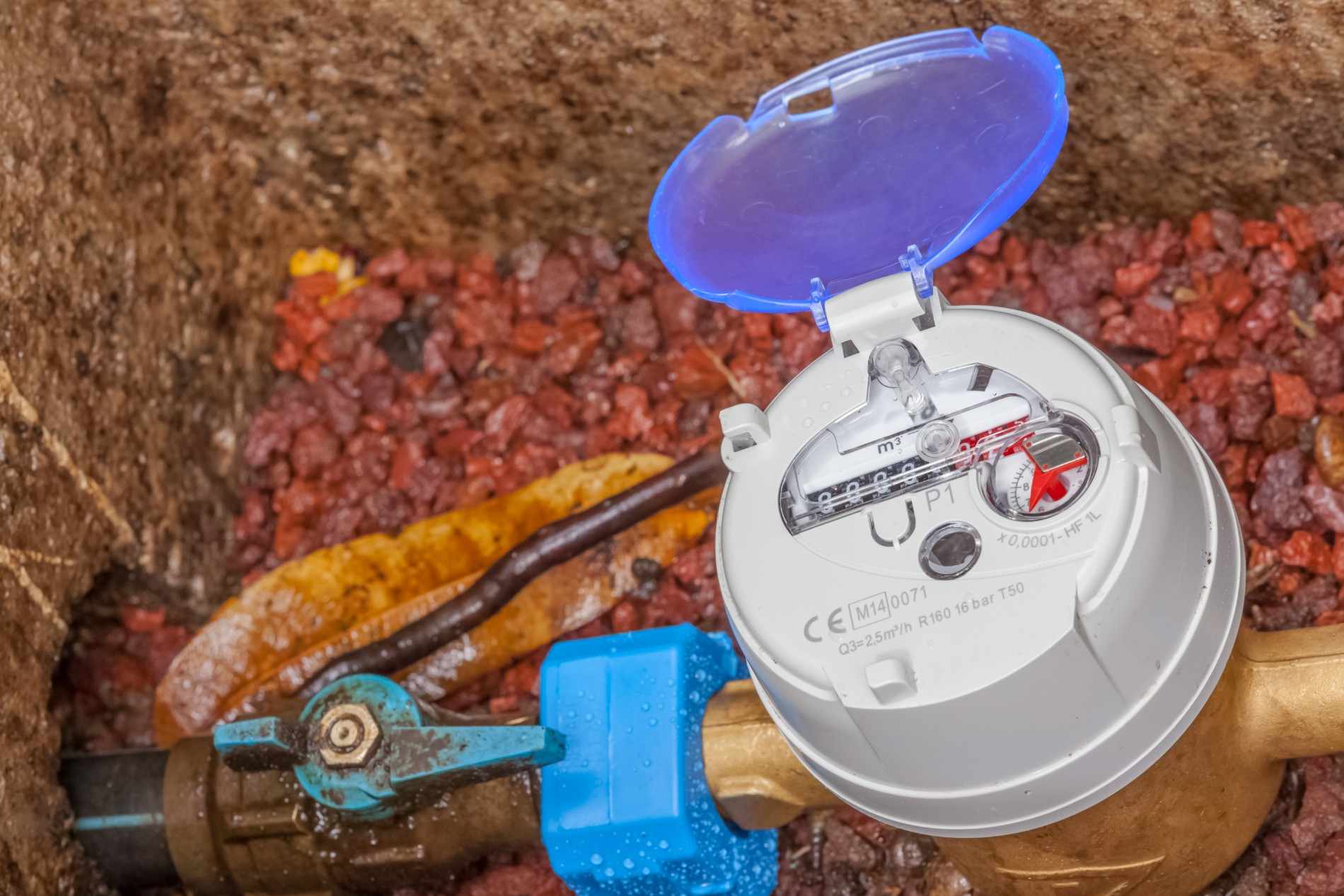




How modern MDM works: AMI data flow, VEE processing, interval data storage, and compliance reporting, explained for utility billing and operations teams.
For US Utilities serving 3,000-100,000 meters and for operations team, billing team and utility managers. For Heads of Billing who own collections accuracy and revenue leakage.
Meter data management (MDM) is the processing layer that sits between your smart meters and your billing engine, receiving raw reads from the AMI head-end, running automated VEE (validation, estimation, and editing), storing interval data, and delivering billing-ready values to downstream systems. Understanding how each stage works helps diagnose where data quality breaks down before it surfaces as a billing error or a customer dispute. The SMART360 meter data management platform connects natively to 25+ AMI head-end systems and runs the full MDM processing pipeline in a single cloud-native environment built for small and mid-sized utilities.
The meter data management systems that most small and mid-sized utilities still operate were designed for a different era. They were built to process one daily read per meter: a manual or AMR-collected value that came in once per billing cycle and fed a straightforward billing calculation. That architecture worked when meters were dumb and reads were simple.
AMI changed the equation. When a utility deploys smart meters communicating every 15 minutes, the volume of incoming data increases by a factor of 96 per meter, per day. Legacy MDM systems were not built to ingest, store, validate, or analyze data at that volume. The result: utilities install AMI infrastructure but do not get the billing accuracy or operational visibility they paid for, because the MDM layer cannot process what the smart meters are generating. For a complete explanation of what MDM does and how the practice has evolved, What Is Meter Data Management covers the full concept and reading method history.
The shift to cloud-native MDM architecture resolves this at the infrastructure level:
Understanding what happens to a meter read between the moment it leaves a smart meter and the moment it becomes a line item on a customer bill clarifies where MDM creates or destroys value. The modern MDM data flow moves through five stages:
The failure points in this chain are predictable: AMI transmission gaps that are not estimated correctly, VEE rules that miss unusual consumption patterns, and integration breaks between MDM and billing that force manual reconciliation. Each failure point is a potential billing error. Most billing accuracy problems in AMI utilities trace to a break in stages 3 or 4.
Is your current MDM running VEE rules that your billing staff can configure without opening an IT support ticket every time a rate schedule changes?
Validation, Estimation, and Editing is the most consequential process in a meter data management system. Every billing accuracy outcome traces back to how well VEE is configured and maintained. Utilities that deploy SMART360 with properly tuned VEE report 50%+ improvements in billing read accuracy within the first billing cycle.
Validation applies configurable rules to every incoming meter read to determine whether the data is credible. Common validation checks include:
Reads that fail validation are flagged as exceptions and do not pass to billing until resolved. The efficiency of your exception management workflow determines how quickly flagged reads are cleared and whether billing delays result.
When a read is unavailable due to a transmission failure, a meter fault, or a scheduled maintenance outage, the MDM system generates an estimated value using approved algorithms:
Estimation accuracy matters because estimated bills generate customer disputes. Utilities with high estimation rates, driven by poor AMI transmission reliability or misconfigured VEE, see correspondingly higher dispute rates and customer service workload. For a detailed look at what each MDM benefit delivers operationally once VEE is correctly configured, meter data management system benefits covers the five measurable outcomes.
After validation and estimation, the editing function applies manual corrections to reads that require human review: meter replacements where the register rolls over, retroactive corrections when a billing error is identified, and regulatory adjustments. Editing creates an auditable record of every change made to a meter read, with timestamps and user attribution. This audit trail is a compliance requirement for most US utilities operating under state regulatory oversight.
Does your MDM have a certified integration for your specific AMI head-end vendor, or is your team maintaining a custom connector that requires updates every time the head-end software is upgraded?
The decision to deploy AMI infrastructure is typically made at the metering level. The MDM implications are often considered later, sometimes after installation. That sequencing creates problems.
AMI systems communicate through head-end systems that are vendor-specific. Sensus FlexNet, Itron Riva, and Landis+Gyr GridStream each use different data formats, transmission protocols, and read delivery mechanisms. Your MDM system must connect to whichever head-end your AMI vendor provides and ingest data in the format that system produces. A utility running a custom-built connector between its AMI head-end and its MDM carries an ongoing maintenance obligation every time either system is updated.
Beyond integration architecture, interval data introduces storage and processing requirements that daily-read MDM systems were not built to handle. A utility deploying 10,000 smart meters collecting 15-minute data generates approximately 35 million interval readings per month. Processing, storing, indexing, and querying that volume without degrading billing performance requires a purpose-built architecture.
A modern MDM system must handle AMI interval data across five dimensions:
SMART360 connects to 25+ AMI and head-end systems including Sensus, Itron, and Landis+Gyr, processing interval data from meter transmission through to validated billing reads without manual intervention or custom connector maintenance.
Meter data is regulated data. State public utility commissions (PUCs) in most US jurisdictions require utilities to maintain accurate meter read records, document estimation events, and produce billing data on demand for dispute resolution and rate case proceedings. The EPA's Safe Drinking Water Act reporting requirements for water utilities include consumption tracking obligations that feed directly from meter data systems.
An MDM system that cannot produce a complete, timestamped audit trail for every meter read creates regulatory exposure. When a state regulator or auditor requests the read history for a specific account across a defined period, your MDM either delivers it in minutes or requires a manual data extraction that takes days.
Cloud-native MDM platforms maintain the full read history in a queryable database. Compliance reports, including consumption summaries, estimation event logs, and exception resolution records, are generated from the same data source used for billing. This eliminates the reconciliation step that on-premise systems typically require when billing data and head-end export data do not match at audit time. For the specific reporting formats, data outputs, and compliance specifications utilities need from their MDM, MDMS reporting and analytics for utilities covers the full regulatory reporting framework.
An AMI head-end collects raw reads from smart meters and temporarily stores them. It manages device communication, firmware updates, and meter configuration. An MDM system receives data from the head-end and performs the data quality work: VEE processing, long-term interval data storage, exception management, and billing system integration. The head-end collects the data; the MDM makes it billing-ready. Without MDM, raw head-end data reaches your billing system unvalidated.
VEE (Validation, Estimation, and Editing) processes every incoming meter read against configurable rules before it reaches billing. Validation checks whether each read is credible based on usage range, history, and meter configuration. Estimation fills gaps when reads are missing. Editing applies manual corrections with a full audit trail. Together, these steps ensure only quality-checked data generates billing charges. Without VEE, billing errors are discovered reactively through customer disputes rather than caught proactively in the data pipeline.
MDM must store reads at the same granularity they are collected: typically 15-minute or 30-minute intervals. For a 10,000-meter utility reading at 15-minute intervals, that is approximately 35 million records per month. This data needs to be queryable by account, meter, time range, and VEE status for billing, dispute resolution, regulatory reporting, and customer usage analysis. Storage architecture designed for daily reads cannot handle this volume without performance degradation.
Yes, but only if the MDM platform has certified integrations for each vendor's head-end system. Generic API connectors are not the same as certified integrations: vendor-certified integrations are tested against specific head-end versions, handle vendor-specific data formats natively, and are updated by the MDM vendor when head-end software changes. Utilities operating mixed AMI fleets (common after mergers or phased deployments) need verified, production-tested integrations for each head-end, not custom-built connectors.
Legacy enterprise MDM platforms typically require 12 to 18 months to implement, including data migration, head-end integration, and staff training. Cloud-native platforms built for small and mid-sized utilities deploy in 20 to 24 weeks, with the key variable being pre-built integration availability for your specific AMI vendor. Island Water Authority completed a full go-live in 8 weeks. For a structured approach to evaluating MDM platforms against your utility's specific requirements, the MDM RFP evaluation guide for utilities covers the full vendor selection framework.
Bynry Inc.
8 The Green STE.R,
Dover, Kent,
Delaware 19901
+1 732-630-0285
Bynry Inc.
Serene Tower, Pakharbaug
Pune, Maharashtra 411021
+91 93252-51217