



Reactive maintenance costs water utilities more than the repair invoice. Learn the hidden cost categories and how to shift to proactive maintenance management.
For US Utilities serving 3,000-100,000 meters and for operations team, billing team and utility managers. For Heads of Billing who own collections accuracy and revenue leakage.
Water utility maintenance management is the system a utility uses to schedule, track, and document maintenance activity across its distribution infrastructure. When that system runs on work order logs and field memory rather than a connected asset register, every repair event becomes an isolated transaction with no link to the asset's condition history, failure pattern, or replacement timeline. The SMART360 asset management module gives water utilities a structured maintenance management framework covering condition tracking, failure history, and automated work order scheduling for infrastructure in the 3,000 to 500,000 meter range.
Reactive maintenance means the utility repairs infrastructure after it fails: a main break triggers a crew dispatch, the repair is made, the work order is closed, and the asset returns to service with no update to its condition history. The next break on the same main follows the same sequence.
For most water utilities, reactive maintenance is not a deliberate policy. It is the operational default that forms when there is no system connecting asset condition data to maintenance scheduling. When the asset register lives in a GIS file, the work order lives in a separate platform, and the maintenance history lives in a technician's memory, there is no mechanism to identify which assets are approaching failure before they fail.
The alternative is proactive maintenance: scheduled inspection and intervention based on condition score, age, material risk, and failure frequency, before the asset reaches critical failure. Getting from reactive to proactive requires the same foundation the capital plan requires: a live, connected asset record. For a complete overview of how utility asset management software structures this data, what is utility asset management software covers the full asset lifecycle framework.
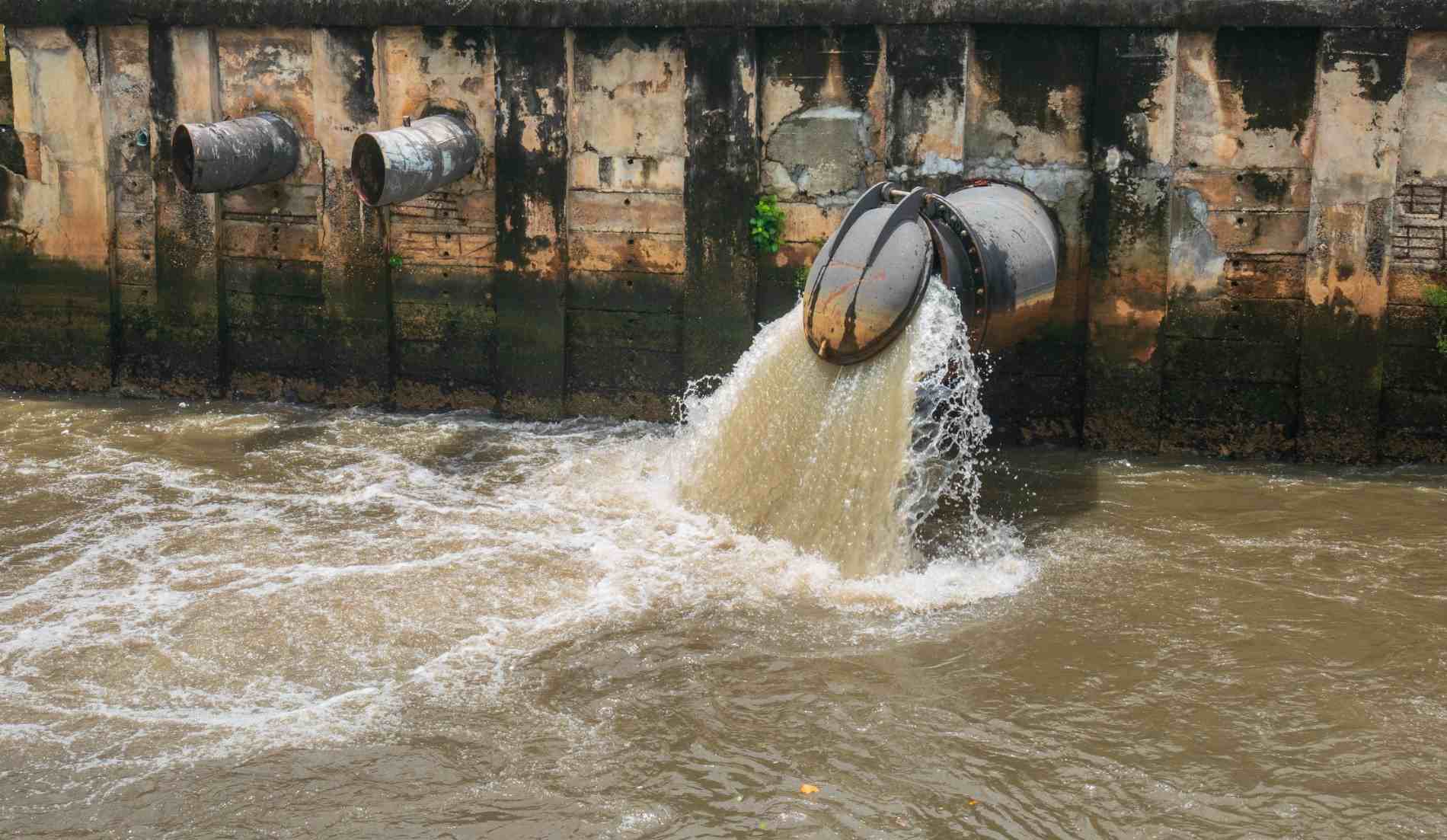
Reactive maintenance looks contained on an individual repair invoice. The true cost accumulates across five categories that rarely appear on the same line item:
For the complete data requirements that water distribution utilities need to build defensible asset condition records, asset management software for water utilities covers the full feature set in depth.
The structural problem with reactive maintenance is not any single repair. It is that break-fix patterns accumulate into informal planning baselines. When a utility has responded to main breaks on the same segment of cast iron pipe three or four times in three years, the crew knows the pipe is failing. The Utility Director probably knows. But if those work orders are not linked to the same asset record in the same system where capital plans are built, those failures are invisible to the CIP.
The consequence is a capital plan built on incomplete data that systematically underestimates replacement urgency. The board approves a capital budget based on documented asset condition from a spreadsheet last updated 18 months ago. Several months into the budget year, an emergency failure forces an unplanned replacement. The capital budget reallocates. Lower-priority items are deferred. The cycle repeats.
For the individual asset decision framework, water utility asset repair vs. replace covers the full evaluation methodology for determining when repair history justifies moving an asset to the replacement queue.
Is your work order history connected to your asset condition records, or does every repair close as an isolated transaction with no link to the asset's documented failure count?
The shift from the left column to the right column is not a staffing decision. It is a data infrastructure decision. Proactive maintenance scheduling is not possible without a connected asset register that links condition scores, work order completions, and maintenance intervals in one system.
Does your maintenance scheduling system update the asset condition record automatically when a work order closes, or does that update depend on someone remembering to do it manually?
Most utilities cannot shift from reactive to proactive overnight. The transition happens in sequence, and each step depends on the previous one being in place:
Island Water Authority completed a full SMART360 deployment in 8 weeks, including data migration and work order integration. The primary variable in any deployment timeline is data readiness: utilities with structured existing records implement faster than those migrating from paper-based inspection logs.
Proactive maintenance management is not only a cost-reduction program. It is the data collection mechanism that makes the next capital improvement plan defensible. Every scheduled inspection that writes back to the asset record is a documented condition data point. Every work order that closes with a repair cost and failure code is a capital planning input. Over 12 to 24 months of connected operations, the asset register becomes the evidence base for every dollar in the CIP.
A Utility Director presenting a five-year capital plan to the city council with documented failure frequency, current condition scores, and projected replacement timelines has a fundamentally different conversation than one presenting a spreadsheet updated quarterly. The first gets funded. The second gets questions no one can answer.
For the full CIP planning methodology, including how to structure asset condition data for federal grant applications through EPA WIFIA, USDA RUS, and IIJA revolving funds, utility capital improvement planning software covers the complete framework.
SMART360's asset management and work order modules are built to function together: work order completion writes directly to the asset record, condition thresholds trigger new work orders automatically, and the full failure history is exportable for capital planning and grant applications. The 25+ pre-built integrations connect to GIS, SCADA, AMI, and billing systems without custom middleware.
Reactive maintenance is the practice of repairing infrastructure after it fails rather than scheduling interventions based on condition data. For water utilities, it means responding to main breaks, pump failures, and pressure events as emergencies rather than addressing asset risk before failure occurs. Most small and mid-sized utilities operate reactively by default because their work order and asset systems are not connected in a single platform.
Proactive maintenance management software connects asset condition scores, work order history, and maintenance interval schedules in a single system. When a work order closes, the asset's condition record updates automatically. Maintenance intervals trigger new work orders before the asset reaches failure. The result is a documented failure history and current condition register that supports both operational scheduling and capital improvement planning.
The cost difference extends beyond the individual repair invoice. Emergency labor runs at premium rates above standard scheduling. Unplanned parts procurement adds cost over planned purchase cycles. Unplanned service outages generate customer credit exposure. Repeated failures on undocumented assets accelerate capital replacement timelines and compress budget cycles. The compounding cost of reactive maintenance typically becomes visible within two to three years of tracking it against a proactive alternative.
Start with a complete asset register: every major asset with age, material, and a condition score. Connect the work order system so repair completions update the asset record automatically. Establish maintenance intervals by asset class. Once two to three years of failure frequency data are in the system, condition-triggered work order rules can replace the reactive dispatch model. Cloud-native platforms built for utilities in the 3,000 to 100,000 meter range can be deployed in 20 to 24 weeks.
Four data sets are required: an asset inventory with condition ratings, a work order history linked to each asset by ID, maintenance interval standards by asset class, and a scheduling system that triggers work orders automatically from condition thresholds or interval calendars. Without the link between work orders and the asset record, the failure history and interval data sets cannot be built from actual field operations.
Bynry Inc.
8 The Green STE.R,
Dover, Kent,
Delaware 19901
+1 732-630-0285
Bynry Inc.
Serene Tower, Pakharbaug
Pune, Maharashtra 411021
+91 93252-51217