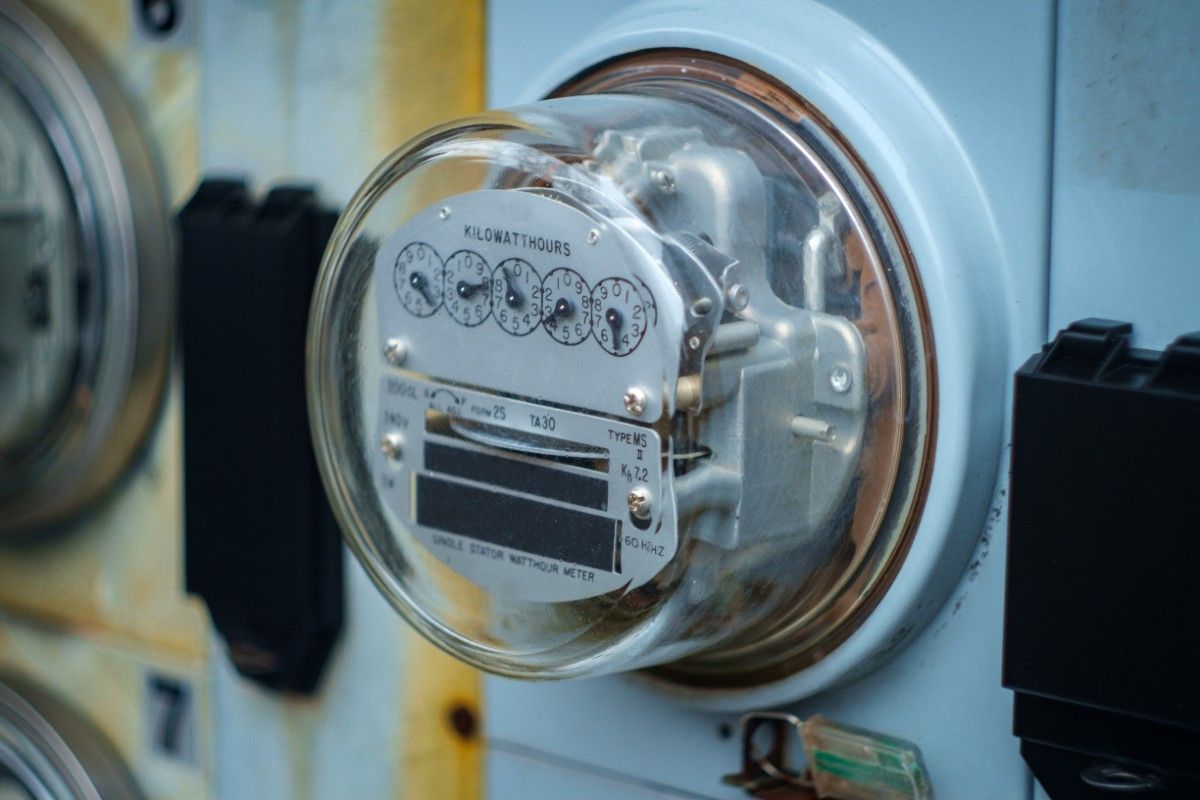





What water utility data management software does, what data it manages, and how it cuts NRW and improves compliance. A guide for US utility managers.
For US Utilities serving 3,000-100,000 meters and for operations team, billing team and utility managers. For Heads of Billing who own collections accuracy and revenue leakage.
Your utility processed tens of thousands of meter reads last month. Some came in from AMI endpoints. Some were estimated. Some were manually entered. They landed in three different systems, none of which talk to each other. Your billing team is reconciling exceptions in a spreadsheet. Your EPA reporting is due in six weeks, and no one is sure which dataset is the authoritative one. This is not a technology problem. It is a data governance problem and it is exactly what water utility data management software is built to solve.
Water utility data management software is defined as a platform that centralizes, validates, and governs all operational data produced by a water utility, including consumption records, meter readings, billing transactions, maintenance logs, and regulatory compliance data in a single integrated system, replacing disconnected spreadsheets and siloed departmental tools.
The distinction between data management software and general utility management software is important. A billing system processes invoices. A work order system tracks field jobs. A data management platform is the connective layer, it governs the data that flows between those systems, ensures it is accurate before it reaches downstream processes, and produces the reporting record your utility needs for operational decisions and regulatory submissions.
For small and mid-sized US municipal water utilities, those managing 3,000 to 100,000 meters, this matters because your data environment is almost always more complex than your team size can handle manually. AMI has multiplied the volume of reads. EPA reporting obligations have tightened. And the cost of a billing error or a compliance gap has never been higher.
A dedicated water utility data management platform governs six primary data streams that most utilities currently handle in fragmented ways:
1. Consumption and meter read data - raw reads from AMI endpoints, manual reads, and estimated reads, with validation logic applied before billing handoff
2. Leak detection and anomaly event data - interval data exceptions, pressure anomaly flags, and unusual consumption patterns that indicate distribution system losses
3. Billing and payment records - invoice history, payment status, disputed charge logs, and adjustment audit trails linked back to the originating meter read
4. Asset and maintenance logs - service history tied to specific meters and infrastructure assets, informing both reactive dispatch and predictive maintenance planning
5. Regulatory and compliance data - Safe Drinking Water Act (SDWA) reporting records, lead and copper monitoring results, and EPA submission history with full audit trails
6. Customer account data - usage history, service tier, contact records, and service request history, giving your customer service team a single view of each account
Without a centralized platform, these six data streams live in separate systems or worse, in separate spreadsheets maintained by individual staff members. When someone leaves, that institutional knowledge leaves with them. When the EPA requests historical data, your team spends days compiling it manually. When a billing dispute arises, reconstructing the originating meter read takes hours.
The operational value of water utility data management software depends entirely on how well it integrates with your existing metering and billing infrastructure. This is where many legacy platforms fall short, they accept data exports but do not integrate in real time, leaving gaps between when a meter event occurs and when it becomes actionable information.
Modern platforms connect directly to your Advanced Metering Infrastructure (AMI) network and Meter Data Management (MDM) system, the layer that collects, stores, and validates interval reads from smart meters. From there, validated meter data flows automatically into billing workflows, eliminating the manual re-entry that introduces errors in legacy setups.
SMART360's meter data management module comes with 25+ pre-built integrations covering leading AMI vendors, GIS systems, ERP platforms, and payment gateways. For a utility that has already invested in smart metering infrastructure, that means the data investment you have already made starts producing downstream value immediately, without a custom integration project.
Non-revenue water (NRW), which is the water that is produced and treated but never billed, is one of the most persistent financial drains on US municipal water utilities. NRW refers to both real losses (physical leaks and main breaks) and apparent losses (meter inaccuracies, billing errors, and unauthorized consumption). According to AWWA benchmarks, US utilities average approximately 16% of water volume lost to NRW annually.
The connection between data management and NRW reduction is direct: you cannot find what you cannot measure, and you cannot measure accurately without clean, governed data.
A water utility data management platform reduces NRW through three mechanisms:
• Interval data analysis - comparing consumption patterns across meter zones to identify district metering anomalies that indicate main breaks or distribution losses before a field crew spots them
• Apparent loss detection - flagging meter read patterns consistent with stopped meters, stuck registers, or manual read errors that cause unbilled consumption to accumulate silently
• Billing audit trails - maintaining a complete chain of custody from meter read to invoice, so any discrepancy between water produced and water billed can be traced to its source data
Utilities running SMART360 have seen approximately a 50% reduction in operational expenditure, a figure that reflects both the efficiency gains of automated data processing and the revenue recovery that comes from identifying and closing NRW sources faster. For amid-sized utility losing 15% of production to NRW, closing even a fraction of that gap generates meaningful annual revenue recovery.
See how SMART360 approaches utility analytics and reporting for a deeper look at the analytics layer built on top of the data management platform.
The Safe Drinking Water Act (SDWA) requires public water systems to monitor water quality, maintain records, and submit regular reports to their state primacy agency and the EPA. For a Utility Director at a municipal system, compliance reporting is not optional, failure to maintain adequate records or submit on time carries significant regulatory risk, including public notification requirements and potential fines.
The problem with manual compliance data management is not that utilities fail to collect the required data. The problem is that the data lives in multiple places, in formats that were not designed for regulatory submission, maintained by staff members who are already stretched thin.
A dedicated water utility data management platform addresses this by:
• Maintaining immutable audit logs for all data entries, amendments, and approvals - creating the chain of evidence the EPA expects to see during an inspection
• Structuring data collection workflows to align with SDWA reporting categories, so the work of compliance reporting happens continuously rather than in a scramble before submission deadlines
• Providing role-based access controls that ensure only authorized personnel can modify compliance-relevant data - which is an audit requirement in itself
For a Utility Director evaluating water utility data management software, the critical questions are not about features lists, they are about operational fit, integration depth, and implementation risk.
Before/after comparison, what changes when you move from fragmented data management to a centralized platform:
Beyond the feature set, three evaluation criteria matter most for small and mid-sized municipal utilities:
• Integration without custom development - your AMI vendor is already deployed. Your billing system is live. The right data management platform connects to both without a six-month custom integration project.
• Pricing that scales withyour meter count - large enterprise utility platforms charge per-user license fees that penalise growth and inflate TCO. SMART360's pay-per-meter pricing model means you pay in proportion to the utility you are managing, not the number of staff members who need access to your own data.
• Implementation on a municipal timeline - the standard objection to replacing a data management platform is implementation risk. SMART360 implements in 12–24 weeks, compared to the 12–18 month industry average for large enterprise utility platforms.
What is the difference between a meter data management system and water utility data management software?
A meter data management system (MDMS) is a specific component that collects, stores, and validates interval reads from AMI meters. Water utility data management software is the broader platform, it includes MDM functionality but also governs billing data, compliance records, asset maintenance logs, and customer account data. MDMS is one data stream; a full data management platform governs all of them in a unified system.
How does water utility data management software help reduce non-revenue water?
It reduces NRW through three mechanisms: interval data analysis that identifies zone-level consumption anomalies consistent with main breaks or distribution losses; apparent loss detection that flags meter read patterns indicating stopped meters or manual entry errors; and billing audit trails that trace every read to every invoice, so discrepancies between water produced and water billed can be identified and closed. AWWA benchmarks suggest US utilities average approximately 16% NRW, even a modest improvement produces meaningful annual revenue recovery.
Does water utility data management software replace our existing billing or AMI system?
No. A water utility data management platform integrates with your existing billingand AMI infrastructure, it does not replace it. It acts as the connective layer between your metering network and your billing system, governing the data that flows between them and ensuring it is validated before it reaches downstream processes. SMART360, for example, offers 25+ pre-built integrations with leading AMI vendors, billing platforms, and GIS systems.
What compliance requirements does water utility data management software help with?
For US public water systems, the primary compliance obligations are under the Safe Drinking Water Act (SDWA), water quality monitoring records, consumer confidence report data, and lead and copper monitoring results. A data management platform helps by maintaining immutable audit logs, structuring data collection to align with EPA reporting categories, and providing role-based access controls that ensure compliance-relevant data integrity. This replaces manual spreadsheet compilation with automated, audit-ready record management.
Bynry Inc.
8 The Green STE.R,
Dover, Kent,
Delaware 19901
+1 732-630-0285
Bynry Inc.
Serene Tower, Pakharbaug
Pune, Maharashtra 411021
+91 93252-51217