



Connecticut utility regulators (PURA) are pushing for lower electric bills. See what changes are coming and how utilities adapt.
For US Utilities serving 3,000-100,000 meters and for operations team, billing team and utility managers. For Heads of Billing who own collections accuracy and revenue leakage.
Connecticut electric utilities are regulated by the Public Utilities Regulatory Authority (PURA), which sits inside the Department of Energy and Environmental Protection (DEEP) but operates as an independent quasi-judicial body. PURA is the agency pushing for lower electric bills through Performance-Based Regulation, contested rate cases, and the AMI rollout approved in 2024. Federal reliability standards from NERC and wholesale market rules from ISO New England layer on top, but the day-to-day bill design, rate approval, and consumer protection work happens at PURA under Connecticut General Statutes Title 16.
Connecticut has some of the highest residential electric rates in the continental United States, and that single fact drives almost every regulatory move PURA makes. Eversource and United Illuminating, the two investor-owned electric distribution companies that serve nearly all of Connecticut, file rate cases, AMI plans, and decoupling proposals into a docket process that has become significantly more contested since the 2020 Take Back Our Grid Act. For utility directors, billing teams, and compliance officers, knowing which regulator owns which question saves weeks during rate proceedings.
This guide breaks down the Connecticut regulatory map so electric utility leaders can build a clean compliance picture and prepare for the operational changes PURA's bill-reduction agenda is driving. Utilities consolidating billing, customer information, meter data, and rate-case reporting on a single platform should look at SMART360 electric utility management software, which is purpose-built for utilities serving 3,000 to 100,000 connections.
Four bodies shape what a Connecticut electric utility can charge, how it must operate, and what it has to report. Most operational questions land at PURA.
Is your utility under PURA jurisdiction?
If you are an electric distribution company (EDC) serving retail customers in Connecticut, the answer is yes for rates, service quality, and most operational rules. Municipally owned electric utilities like Wallingford, Norwich, Bozrah Light and Power, and Groton are exempt from PURA rate jurisdiction. They self-regulate under their own boards but still operate under NERC reliability standards and ISO-NE wholesale market rules. There are fewer than 10 municipal electrics in Connecticut, and they account for roughly 5% of the state's electric load.
Connecticut residential rates routinely run 50% to 80% above the national average. PURA's response since 2020 has been a sequence of structural changes aimed at the parts of the bill regulators can actually move.
The Take Back Our Grid Act (Public Act 20-5) gave PURA explicit authority to impose performance metrics on EDCs and to penalize underperformance with financial consequences. It was the legislative response to Eversource's handling of Tropical Storm Isaias, and it set the tone for everything PURA has done since.
Performance-Based Regulation (PBR), approved by PURA in 2024 under Docket 21-05-15, ties a slice of the EDCs' allowed return on equity to outcomes like outage duration, customer satisfaction, low-income affordability, and electrification enablement. Utilities that miss the targets earn less; utilities that exceed them earn more. The PBR framework replaced the traditional cost-of-service rate case as the primary lever for managing utility performance.
The Public Benefits Charge controversy of 2024 made the political reality of Connecticut rate design very visible. PURA approved a temporary increase to the Public Benefits portion of bills to recover deferred costs from earlier programs, residential customers saw bills jump in July 2024, and the political backlash led PURA to revisit the recovery schedule and slow the pace. The episode is a reminder that rate decisions in Connecticut are not technical exercises insulated from politics.
Connecticut electric compliance work is anchored in five core regulatory references. Compliance officers and rate analysts at Connecticut EDCs should be able to locate each one in seconds.
The full Connecticut General Statutes are published at Connecticut General Assembly. PURA dockets and decisions are searchable at PURA Case Lookup.
PURA does not regulate the bulk electric system. Reliability of high-voltage transmission, wholesale market participation, and cybersecurity for bulk power are federal matters governed by NERC standards and ISO New England tariffs.
NERC Reliability Standards apply to Connecticut transmission operators and certain generation owners. The CIP family of standards covers cybersecurity for the Bulk Electric System, with annual self-certification and triennial audits. Distribution-only utilities below the BES threshold are not directly subject to NERC CIP, but most Connecticut EDC compliance officers track CIP requirements anyway because cybersecurity expectations from PURA and from cyber insurance carriers are converging toward the CIP framework.
ISO New England runs the wholesale market, the Forward Capacity Market, and the regional transmission planning process. Connecticut EDCs participate as load-serving entities and pay capacity costs that flow through to retail bills as a separate line item. The capacity cost component is the part of the Connecticut electric bill that PURA has the least control over, which is why PURA's bill-reduction work focuses on distribution rates and Public Benefits charges rather than capacity charges.
For utilities operating across the federal-state compliance boundary, a regulatory compliance software platform for utilities centralizes evidence, automates report generation, and keeps the audit trail intact whether the requirement comes from PURA, NERC, or ISO-NE.
AMI deployment is now the largest operational change Connecticut electric utilities have made in a generation. PURA approved Eversource and United Illuminating AMI plans in 2024 under Docket 17-12-03, with full deployment running through the late 2020s. The approved AMI plans include cost recovery, opt-out provisions for customers who decline AMI meters, and customer data privacy rules that exceed federal standards.
The rate-design implications are significant. AMI enables time-varying rates including time-of-use, critical peak pricing, and real-time pricing. PURA's stated direction is that AMI should support rate options that let customers reduce bills by shifting load, not just enable utility cost recovery for the meter rollout.
Are you ready for the AMI rollout?
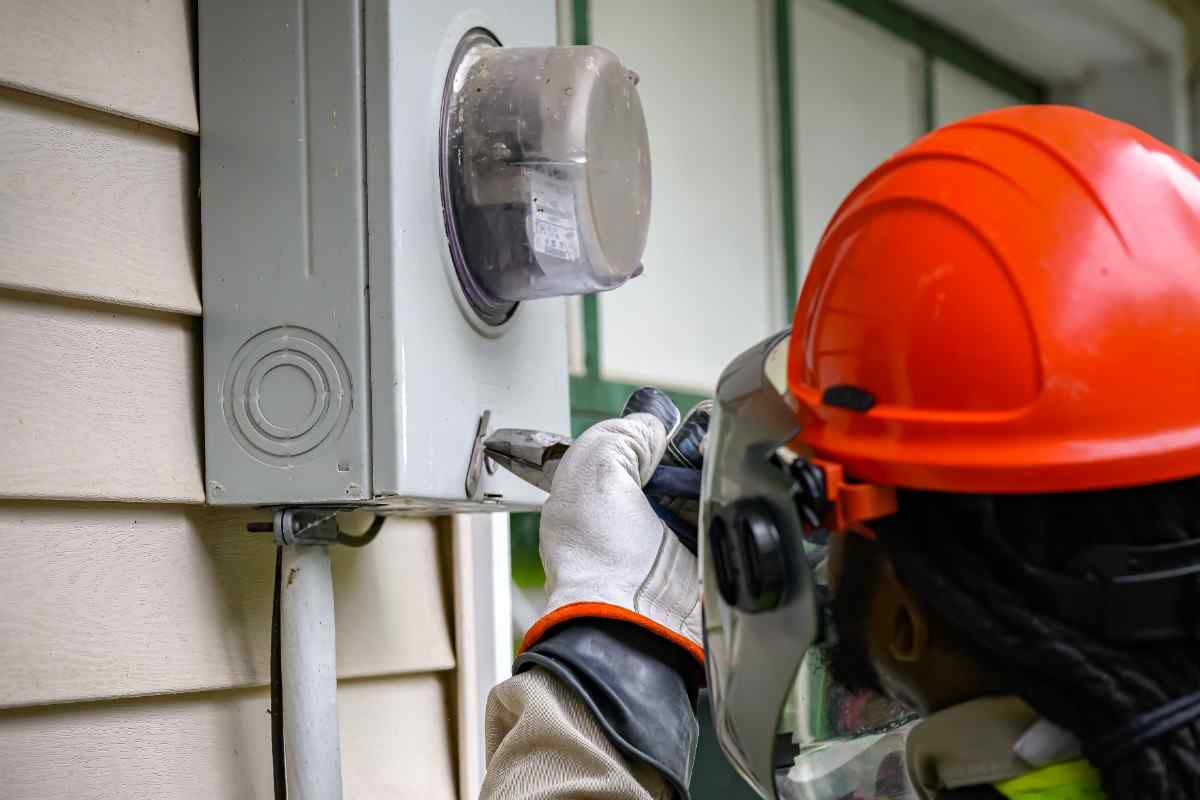
For utility billing and customer information teams, AMI integration is the most demanding technical change in the rate-design transition. Interval meter data has to land in the meter data management layer, be validated, and flow into rating engines that can apply time-varying rates to the right intervals. The integration architecture between AMI head-end systems, MDM, CIS, and billing is the single biggest determinant of how clean the AMI transition feels to customers. See our guide on how AMI smart meters connect to billing for the technical detail on this integration path.
Rate cases under the post-2024 Performance-Based Regulation framework follow a multi-step proceeding that typically runs 9 to 12 months from filing to final decision. Here is the path.
The reporting burden under PBR rate plans is meaningfully heavier than under traditional cost-of-service rates. Performance metric data has to be collected, validated, and filed on the cadence the rate decision specifies. Utilities that built their billing and customer information systems around once-a-year cost-of-service reporting often find PBR reporting harder than the rate case itself.
The combination of PBR reporting, AMI rate design, and PURA's consumer protection rules raises the bar on what a billing and customer information platform has to do. The evaluation criteria that matter most for Connecticut EDCs and municipal electrics:
For a side-by-side look at how the vendors serving electric utilities stack up on these criteria, see our comparison of the best electric utility billing software for 2026.
SMART360 by Bynry is built on this architecture. It connects billing, customer information, meter data management, and work orders so that PBR reporting and AMI rate design flow from the same data utilities already use operationally. The credibility check: Island Water Authority deployed SMART360 in 10 weeks and achieved a 47% operational cost reduction, a 92% reduction in billing errors, and a 22% improvement in customer satisfaction. Every utility that has gone live on the platform is still on it.
Rate cases, AMI rollouts, and PBR implementation are easier to manage when utility leaders have peer benchmarks. Connecticut EDCs and municipal electrics typically send teams to regional Northeast electric conferences as well as the national Edison Electric Institute meetings. The most useful sessions for compliance and operations leaders cover Performance-Based Regulation outcomes from other Northeast states, AMI integration lessons, and customer data privacy practices that exceed federal floors. For the full 2026 schedule of industry meetings that Connecticut electric leaders attend, see our list of electric utility conferences for 2026.
The Public Utilities Regulatory Authority (PURA) regulates electric distribution companies in Connecticut for rates, service quality, AMI plans, and consumer protection. PURA sits inside the Department of Energy and Environmental Protection (DEEP) but operates as an independent quasi-judicial body. The North American Electric Reliability Corporation (NERC) sets reliability standards for the Bulk Electric System, and ISO New England runs the wholesale electricity market. Municipally owned electrics like Wallingford and Norwich are exempt from PURA rate jurisdiction.
PURA's bill-reduction agenda has three main tracks: Performance-Based Regulation that ties utility earnings to outcomes including affordability, contested rate cases that scrutinize EDC capital spending, and AMI-enabled rate options that let customers reduce bills by shifting load. The Take Back Our Grid Act of 2020 gave PURA authority to impose financial penalties for poor performance. Public Benefits Charge recovery has been adjusted in response to the 2024 backlash to slow the pace of cost recovery.
Performance-Based Regulation (PBR) is the rate-making framework PURA approved in 2024 under Docket 21-05-15. PBR ties a slice of utility earnings to outcomes like outage duration, customer satisfaction, low-income affordability, and electrification enablement. Utilities that miss the targets earn less; utilities that exceed them earn more. PBR replaced traditional cost-of-service rate cases as the primary lever PURA uses to manage utility performance.
Eversource and United Illuminating filed AMI plans approved by PURA in 2024 under Docket 17-12-03. Full deployment runs through the late 2020s, with the exact schedule varying by utility and territory. The approved plans include cost recovery, customer opt-out provisions, and customer data privacy rules that exceed federal standards. AMI enables time-varying rate options including time-of-use, critical peak pricing, and real-time pricing for customers who choose them.
No, not for rates and service quality. The fewer than 10 municipally owned electric utilities in Connecticut, including Wallingford, Norwich, Bozrah Light and Power, and Groton, operate under their own boards and are statutorily exempt from PURA rate jurisdiction. They are still subject to NERC reliability standards for any bulk-power-connected facilities, ISO New England wholesale market rules, and state consumer protection statutes. PURA's PBR framework and AMI dockets do not apply to municipal electrics.
Bynry Inc.
8 The Green STE.R,
Dover, Kent,
Delaware 19901
+1 732-630-0285
Bynry Inc.
Serene Tower, Pakharbaug
Pune, Maharashtra 411021
+91 93252-51217