




Kenosha Water Utility rules and regulations: Wisconsin DNR, PSCW, NR 809, Great Lakes Compact & Lake Michigan source water explained for area utilities in 2026.
For US Utilities serving 3,000-100,000 meters and for operations team, billing team and utility managers. For Heads of Billing who own collections accuracy and revenue leakage.
Water utility regulation in Kenosha, Wisconsin is governed by the Wisconsin Department of Natural Resources (DNR) under federal Safe Drinking Water Act primacy, with state-specific rules in Wisconsin Administrative Code chapters NR 809 through NR 812. Rate regulation falls to the Public Service Commission of Wisconsin (PSCW). Water withdrawals from Lake Michigan are governed by the Great Lakes-St. Lawrence River Basin Water Resources Compact of 2008, which the City of Kenosha and the Kenosha Water Utility participate in as Lake Michigan basin users. Local ordinances managed by the Kenosha Water Utility handle service connections, metering, and billing within the city.
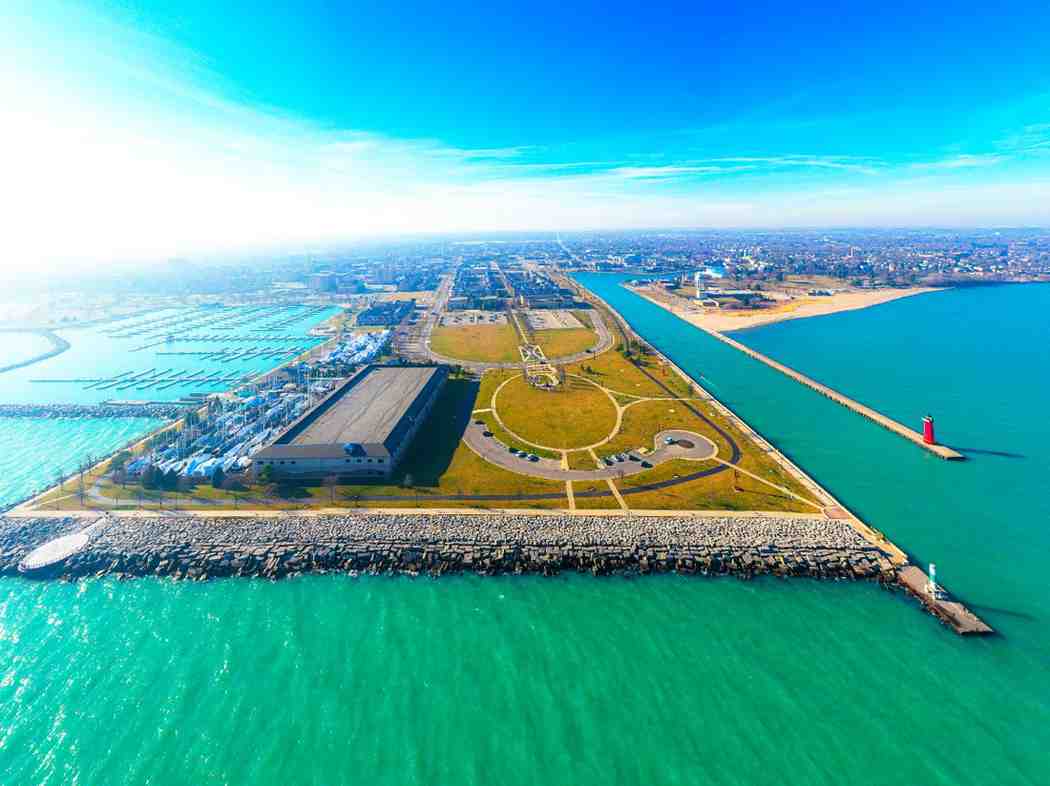
The Kenosha Water Utility serves roughly 99,000 city residents plus portions of the Village of Pleasant Prairie and parts of the Town of Somers, drawing all of its water from Lake Michigan through two treatment plants on the lakefront (Kenosha Water Utility). Around it sit the City of Racine Water Utility, Pleasant Prairie Water Utility, Caledonia, and a corridor of municipal systems running north toward Milwaukee. All of them operate under the same overlapping framework: federal SDWA, Wisconsin state rules, the Great Lakes Compact, and local ordinances. The combination is straightforward to navigate once the regulatory structure is clear.
This guide explains the regulatory framework, Lake Michigan source-water realities, and software modernization priorities specific to utility managers operating in Kenosha and southeastern Wisconsin. For utilities running a platform replacement, see SMART360 for water utility management.
The Kenosha metro and surrounding southeastern Wisconsin corridor host a mix of municipal water utilities and a few smaller systems. The major providers:
Each operator runs its own billing, CIS, and field operations stack. Several share treatment capacity or wholesale agreements across municipal lines, particularly along the Interstate 94 corridor where industrial and warehouse demand is concentrated.
Four regulatory bodies shape day-to-day decisions for Kenosha-area water utilities. The primary state regulator is the Wisconsin Department of Natural Resources, which administers the federal Safe Drinking Water Act under state primacy delegation and enforces the Wisconsin Administrative Code drinking water rules (Wisconsin DNR Drinking Water). Public Water Supply Systems must comply with Wisconsin Administrative Code NR 809 (Safe Drinking Water), NR 810 (operating standards), NR 811 (construction requirements), and NR 812 (well construction where applicable). Rate regulation for municipal water utilities sits with the Public Service Commission of Wisconsin (PSCW), which approves rates, service rules, and major capital projects. Lake Michigan withdrawals are governed by the Great Lakes-St. Lawrence River Basin Water Resources Compact of 2008, administered through the Wisconsin DNR's withdrawal approval program. Local water rules sit in the Kenosha Municipal Code, primarily covering service connections, billing terms, and customer relations. For the broader compliance framework, see the regulatory compliance software guide for utility companies.
Lake Michigan is the foundational water source for Kenosha and the entire southeastern Wisconsin coastal corridor. The Great Lakes Compact of 2008 was a response to decades of concern about water diversions outside the Great Lakes basin and established a binational framework restricting new or expanded withdrawals from the basin. Kenosha and other Lake Michigan-coast utilities sit inside the basin and have established withdrawal rights, but any expansion requires both Wisconsin DNR approval and compact-level review.
The practical consequence for operations: utilities track withdrawal volumes carefully, report monthly to the DNR, and consider basin-wide impact when evaluating capacity expansion. Lake Michigan is also subject to a documented set of source-water quality concerns, including seasonal algal bloom monitoring, microcystin sampling, PFAS detections in nearshore waters, and zebra mussel and quagga mussel impacts on intake infrastructure. Wisconsin DNR has published source-water assessments for every Lake Michigan-coast utility under the federal Source Water Assessment and Protection program.
Compliance for Wisconsin water utilities runs on top of the standard federal SDWA framework but adds several state-specific requirements. The Annual Drinking Water Report (Consumer Confidence Report or CCR) must be published by July 1 each year covering the previous calendar year's data. The Lead and Copper Rule Revisions require service line inventories submitted to the state, with Wisconsin's timeline accelerated for utilities with significant lead service line counts. PFAS sampling for the federal Unregulated Contaminant Monitoring Rule (UCMR 5) applies to systems serving more than 3,300 connections; Wisconsin DNR has published source-specific PFAS findings in several Lake Michigan-corridor utilities. The federal Revised Total Coliform Rule (RTCR) is implemented through NR 809, with sampling site plans and monthly compliance schedules.
State-level reporting includes monthly chemical and bacteriological monitoring per NR 809, quarterly disinfection byproduct sampling under Stage 2 DBPR, annual sanitary surveys, and triennial source water vulnerability assessments. Cross-connection control programs are mandatory under NR 811 and Wisconsin's commercial plumbing code. For the broader federal compliance framework, see the EPA regulations and utility billing software compliance guide.
Across the Kenosha metro and southeastern Wisconsin corridor, modernization priorities reported at Wisconsin AWWA Section meetings and Wisconsin Water Association events cluster on six recurring themes. See the water utility conferences calendar for 2026 for events where these are publicly discussed.
A modern utility management platform addresses Kenosha-area operations in five concrete ways:
Three questions matter more than the feature list when a Kenosha-area water utility evaluates a new platform.
DNR reporting templates are specific. A platform with native Wisconsin reporting saves a multi-week custom integration project.
Compact reporting is an additional layer beyond federal SDWA. Confirm the vendor understands it before contract.
A 20 to 24-week implementation is realistic for a Kenosha-area utility serving 25,000 to 100,000 connections. Larger consolidations or multi-utility deployments run longer. Confirm phased cutover options that avoid the December-through-March winter season when field response is hardest and the freeze-thaw operational risk is highest.
Four bodies share oversight: the Wisconsin Department of Natural Resources enforces the federal Safe Drinking Water Act and Wisconsin Administrative Code drinking water rules; the Public Service Commission of Wisconsin rate-regulates municipal water utilities; the Great Lakes-St. Lawrence River Basin Water Resources Compact Council oversees Lake Michigan withdrawal compliance; and the federal EPA Region 5 oversees Wisconsin state primacy compliance and supports the Great Lakes Restoration Initiative.
The Great Lakes-St. Lawrence River Basin Water Resources Compact, ratified by the eight Great Lakes states and signed by Congress in 2008, restricts withdrawals from the Great Lakes basin and bans most new diversions outside the basin. Kenosha and other Lake Michigan-coast utilities sit inside the basin and have established withdrawal rights. Any expansion of those rights requires Wisconsin DNR approval and compact-level review. The compact also creates a binational governance structure with Ontario and Quebec for basin-wide management.
The primary chapters are NR 809 (Safe Drinking Water Act implementation including monitoring, reporting, and MCLs), NR 810 (Public Water System operating requirements), NR 811 (community water system construction standards), and NR 812 (well construction and pump installation, applicable to utilities with wells). NR 809 is the chapter most utilities interact with daily for compliance and reporting.
The federal Consumer Confidence Report Rule requires community water systems to publish a CCR each year by July 1 covering the previous calendar year. Wisconsin DNR provides template support. Utilities typically begin CCR preparation in February or March because the source water data and sampling results take time to compile, and Lake Michigan-corridor utilities often include source water assessment summary text that requires DNR coordination.
A typical mid-market deployment serving 25,000 to 100,000 connections runs 20 to 24 weeks from contract signing to first validated billing cycle. Greenfield deployments without legacy data migration can run shorter. Major cutovers should avoid the December-through-March winter season when field response is hardest and operational risk is highest.
For peer geographic context, see the Montana water utility regulations guide, which covers a very different state regulatory framework operating under prior appropriation water rights. Authority references: Kenosha Water Utility; Wisconsin DNR Drinking Water; Public Service Commission of Wisconsin; Wisconsin Administrative Code NR 809; Wisconsin Statutes Chapter 281; Great Lakes-St. Lawrence River Basin Water Resources Compact Council; EPA Region 5.
Bynry Inc.
8 The Green STE.R,
Dover, Kent,
Delaware 19901
+1 732-630-0285
Bynry Inc.
Serene Tower, Pakharbaug
Pune, Maharashtra 411021
+91 93252-51217