




Legacy utility software costs more than you think. See the full 5-year TCO breakdown, the Architecture Tax, and how cloud SaaS reduces it.
For US Utilities serving 3,000-100,000 meters and for operations team, billing team and utility managers. For Heads of Billing who own collections accuracy and revenue leakage.
Utility software total cost of ownership (TCO) is the full five-year cost of buying, implementing, running, and maintaining a utility platform, not just the license fee. The license is usually only 20 to 35 percent of the real total; the rest hides in hardware, IT staffing, maintenance contracts, upgrades, integrations, and per-change fees. You reduce TCO by moving off on-premise infrastructure to a cloud platform that folds those costs into a predictable subscription and replaces billable change requests with configuration.
Your legacy vendor just quoted another annual maintenance renewal at a fifth of the original contract value, for a system that still runs on servers in the basement and has not had a meaningful upgrade in years. Before you sign, it is worth asking what the system actually costs you, all in. That number is almost always higher than the maintenance invoice suggests.
This guide breaks down utility software total cost of ownership: what it includes, where legacy systems hide their real costs, and how to build a defensible five-year comparison for your board. It is written for water, electric, and gas utilities under about 100,000 meters. The platform that consolidates the systems this analysis covers is the utility billing software at the center of most utilities' software spend.
Utility software TCO is the complete financial cost of acquiring, implementing, running, and maintaining a platform over its useful life, typically modeled across five years. It includes the license or subscription, implementation and migration, IT infrastructure, maintenance, training, integrations, compliance tooling, and unplanned support. Most procurement decisions fixate on the license or subscription fee, which represents only about 20 to 35 percent of the five-year cost. The rest, the part that rarely appears in a vendor proposal, is what this guide surfaces. This page covers software TCO broadly; for the billing-specific version, see the total cost of ownership of utility billing software.
Are you budgeting the maintenance invoice, or the full cost of keeping software on-premise?
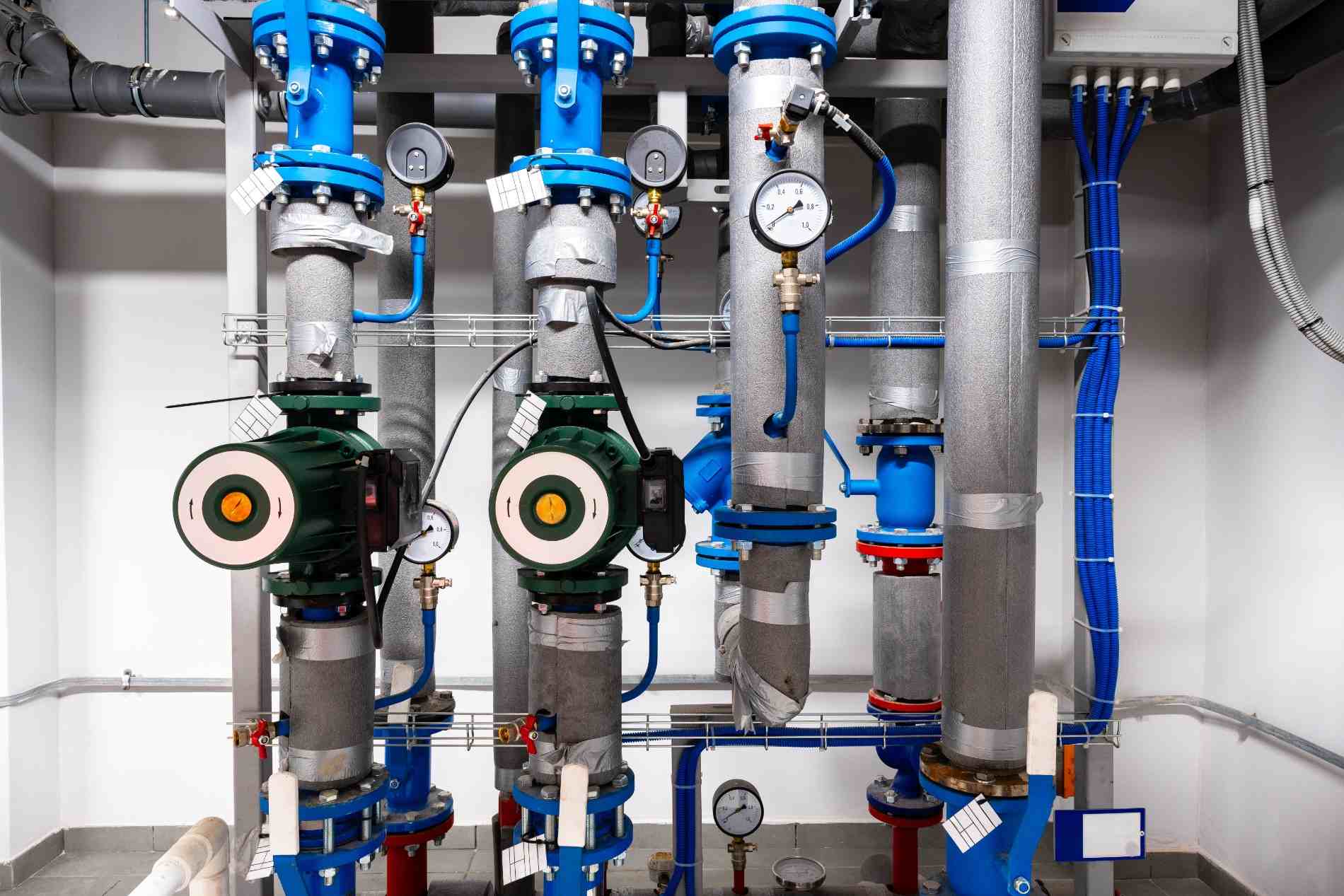
On-premise software carries cost categories that cloud SaaS eliminates. Before evaluating any replacement, itemize what your current system costs across every line, not just the contract.
The maintenance line alone compounds: legacy vendors typically charge 18 to 22 percent of the original license fee every year for maintenance (Oracle's standard rate is 22 percent), so after four to five years a utility has effectively paid for the software a second time. Compliance adds more: keeping up with EPA drinking water reporting and, for electric utilities, NERC CIP standards on a legacy system means extra tooling and audit time. A cloud-native platform removes the hardware, staffing, and compliance-tooling lines and folds the rest into a subscription, which is the core of why utilities move billing to the cloud.
Would these five lines show up in your replacement budget, or surface as surprises after go-live?
These rarely appear in vendor proposals and are consistently underestimated in replacement budgets:
The last one is the quiet killer: a phased migration removes it without a big-bang cutover, and the practical path is covered in migrating legacy utility systems to the cloud.
How much did your vendor charge last year for changes that should have been settings?
The largest hidden driver of legacy TCO is not any one line above, it is the steady stream of billable change requests for routine configuration. On legacy platforms, a rate change or a new bill format is a professional-services engagement. On a cloud-native platform, it is an admin-UI setting. The difference over five years is substantial.
Ask your current vendor for the change-request log from the last two to three years. That document is the most honest cost projection you will get this week. For the longer arc of how billing platforms got here, see the evolution of utility billing platforms.
The illustrative model below compares deployment models for a mid-sized US utility of roughly 15,000 to 40,000 meters. These are planning ranges, not a quote; your figures will vary by size, vendor, and current infrastructure. The pattern, not the precise number, is the point: cloud shifts cost from unpredictable capital and change-request spikes to a level subscription.
Anchored to real deployment data rather than the illustrative model, Bynry's comparison for a large utility put the 10-year cost of a legacy stack at $2.15M to $5.65M against $600K to $900K on SMART360, a delta of $400K to $2.35M in the utility's favor. For the platform-level comparison, see the best cloud-based utility platform guide.
The pricing model is not just a commercial preference; it decides how TCO scales. Three structures dominate the US utility software market.
Pay-per-meter pricing is agnostic to staffing: your cost reflects what you manage, not how many logins you maintain, and budget growth ties to meter growth you can forecast. For how the models compare in practice, see the utility billing software pricing guide.
Have you quantified the cost of doing nothing, or only the cost of the new system?
Most replacement proposals fail at the board level not because the numbers are wrong, but because they price the replacement without pricing inaction. Build the case in this order.
For a structured evaluation to run alongside the TCO case, use the utility billing software evaluation checklist.
The license or subscription fee, implementation and professional services, data migration, hardware infrastructure for on-premise systems, IT staffing, annual maintenance contracts, integration development, training, and unplanned support. For on-premise platforms, hardware refresh every four to six years and billable change requests add significant recurring cost that initial budget models usually omit.
For utilities under about 100,000 meters, cloud SaaS consistently produces a lower five-year TCO than legacy on-premise systems. The main savings come from eliminated hardware, reduced IT staffing, and the shift from unpredictable upgrade and change-request spikes to a predictable subscription. Year one, which carries implementation and migration, is the highest-cost year; years two through five are where the savings accumulate.
Pay-per-meter pricing scales the subscription with the number of active metered connections rather than user logins or a flat license. For utilities with lean teams it produces lower TCO than per-user pricing because staffing efficiency is not penalized, and it makes forecasting easier because budget growth ties to meter growth the utility can model.
Implementation, professional services, data migration, training, and integration setup typically represent 30 to 60 percent of the first-year cost. For legacy enterprise vendors with 12-to-18-month timelines, services often exceed the license itself. Cloud-native platforms with pre-built migration tools and shorter cycles cut this component sharply.
Current hardware and server costs, annual maintenance and support fees, IT staff time on the current system, major upgrade cycle costs, a data-migration estimate, integration development costs, a training budget, estimated billing-error losses, and estimated annual downtime cost. Model these across five years for both the current system and a replacement to produce a defensible board comparison.
The license fee is the number vendors show you; the hardware, staffing, upgrades, and change requests are the number that actually governs your budget. Cloud-native software reduces TCO by eliminating the infrastructure lines and replacing billable change requests with configuration. See how SMART360's utility billing software folds those costs into a predictable per-meter subscription, so the five-year number is one your board can forecast and defend.
Bynry Inc.
8 The Green STE.R,
Dover, Kent,
Delaware 19901
+1 732-630-0285
Bynry Inc.
Serene Tower, Pakharbaug
Pune, Maharashtra 411021
+91 93252-51217