



Water utility management Savannah, Georgia guide for US utilities with 3,000-100,000 meters & Georgia EPD rules that shape operations teams' decisions in 2026.
For US Utilities serving 3,000-100,000 meters and for operations team, billing team and utility managers. For Heads of Billing who own collections accuracy and revenue leakage.
Water utility management in Savannah, Georgia is shaped by three specific factors: the Floridan Aquifer as the primary groundwater source, documented salt water intrusion along the Georgia coast that constrains pumping permits, and a service footprint that crosses City of Savannah, Chatham County, and several smaller municipal and private utilities. Operators in this area run a billing, customer service, and asset management workload similar to other mid-market US utilities, but the regulatory and water-source context is distinctive enough to drive specific software and process choices.
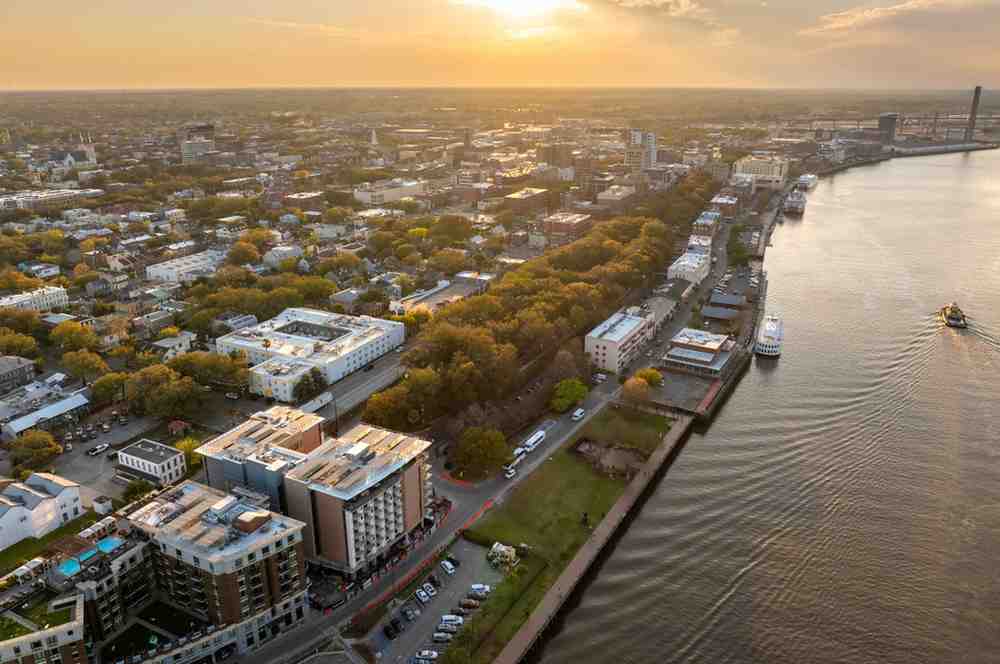
The Savannah metro area is home to one of the largest coastal water systems in Georgia. The municipal utility serves roughly 145,000 customers across a 109 square mile footprint, drawing water primarily from the Upper Floridan Aquifer plus surface water from the Savannah River system (City of Savannah Water Resources). Surrounding the city are smaller utilities serving Chatham County, Effingham County, Bryan County, and the unincorporated suburbs. Together they cover the metro's 400,000-plus residents and a substantial industrial load anchored by the Port of Savannah.
This guide explains the regulatory framework, infrastructure realities, and software modernization priorities specific to utility managers operating in coastal Georgia. For utilities running an active platform replacement, see SMART360 for water utility management.
Operators in the Savannah area should know which utilities serve which footprints, because residents and businesses regularly move between service zones. The major providers:
Each operator runs its own billing, CIS, and field operations stack. Some share treatment capacity through inter-utility agreements, particularly between Savannah and Chatham for industrial users near the port.
Three regulatory bodies shape day-to-day decisions for water utilities in the Savannah area. The primary state regulator is the Georgia Environmental Protection Division (Georgia EPD), which administers the federal Safe Drinking Water Act and the state Water Quality Control rules (Georgia Rule 391-3-6). Coastal-specific oversight comes from the Coastal Resources Division of the Georgia Department of Natural Resources, which manages Coastal Marshlands Protection Act permits and influences any water main, outfall, or treatment plant work near tidal waters. Regional planning sits with the Coastal Georgia Regional Commission, which coordinates the 10-county Coastal Georgia Water Management Plan that allocates pumping capacity from the Floridan Aquifer.
For a deeper view of Georgia's statewide water regulatory environment, see the Georgia water utility regulations guide. Federal compliance (EPA SDWA primacy, Lead and Copper Rule, PFAS rules) is enforced through Georgia EPD as the state primacy agency.
The Upper Floridan Aquifer is the foundation of municipal water supply across coastal Georgia. It is also the source of one of the region's most documented operational constraints: salt water intrusion. The US Geological Survey has tracked chloride-level migration in the Floridan Aquifer beneath the Georgia coast for decades and confirmed that excessive pumping near the coastline accelerates the inland movement of brackish water (USGS Floridan Aquifer studies).
The practical consequence: Georgia EPD caps groundwater withdrawal permits in Chatham County and adjacent coastal counties to prevent further intrusion. The Coastal Georgia Water Management Plan codifies these caps. Utilities cannot meet long-term demand growth through new wells alone, which is why Savannah's Water Resources Department has invested in surface water capacity (Abercorn Creek, the Savannah River) and aggressive water-loss reduction. For an operator, this turns infrastructure asset management and leak detection from optional efficiency projects into compliance-driven priorities.
Across the Savannah metro, the modernization priorities reported at regional AWWA chapter meetings and in capital improvement plans cluster on six recurring themes. See the water utility conferences calendar for 2026 for AWWA Georgia Section and AMTA Coastal Chapter events where these get discussed publicly.
Compliance for Savannah-area utilities runs on top of the standard federal SDWA framework but adds coastal-specific requirements. The CCR (Consumer Confidence Report) must be published annually and must reflect any source-water transitions (groundwater versus surface water blends). The Cross-Connection Control Rule is enforced rigorously given the high-density industrial customer base near the port. Lead and Copper Rule Revisions require a service line inventory by address, which most Savannah-area systems are still completing. PFAS sampling under the federal Unregulated Contaminant Monitoring Rule (UCMR 5) applies to the larger systems and influences any decision about source-water blending. For the broader federal compliance framework, see the EPA regulations and utility billing software compliance guide.
State-level reporting includes monthly water withdrawal reporting to Georgia EPD per the pumping permit, plus annual water-loss audits in the AWWA M36 format that the Georgia Water Stewardship Act of 2010 requires for utilities over 3,300 connections.
A modern utility management platform addresses the operational realities of coastal Georgia water in five concrete ways:
Three questions matter more than the feature list when a Savannah-area utility evaluates a new platform.
EPD reporting is monthly and requires specific data points. A platform with native withdrawal-reporting templates saves a multi-week custom integration project.
Most coastal Georgia utilities have a Schneider, Inductive Automation, or Rockwell SCADA stack, an Esri ArcGIS deployment, and a separate LIMS. Confirm pre-built connectors before contract.
A 20 to 24-week implementation is realistic for a typical Savannah-area municipal utility serving 10,000 to 50,000 connections. Larger consolidations or multi-utility deployments run longer. Confirm phased cutover options if you operate during hurricane season (June through November), when major system changes are riskier.
Three bodies share oversight: Georgia EPD enforces the federal Safe Drinking Water Act and state water quality rules; the Coastal Resources Division of the Georgia Department of Natural Resources oversees coastal marshlands and tidal-area permits; the Coastal Georgia Regional Commission coordinates the regional water management plan that caps groundwater withdrawals.
The Upper Floridan Aquifer is the primary source for the City of Savannah Water Resources Department, supplemented by surface water from the Abercorn Creek and Savannah River systems. The mix has shifted toward surface water in recent decades because of state-imposed groundwater pumping caps designed to prevent salt water intrusion.
The AWWA M36 manual is the industry-standard methodology for utility water loss auditing. The Georgia Water Stewardship Act of 2010 requires every water utility serving more than 3,300 connections to complete an M36 audit annually and submit results to Georgia EPD. The audit identifies apparent loss (metering and billing errors) and real loss (physical leakage).
Excessive groundwater withdrawal near the coast accelerates inland movement of brackish water, which can contaminate fresh-water wells. Georgia EPD caps coastal withdrawal permits to slow intrusion. Utilities cannot meet demand growth solely by drilling new wells; they must invest in surface water capacity and aggressive water-loss reduction. Continuous AMI-based leak detection becomes a permit-compliance issue, not just an operational efficiency project.
A typical mid-market deployment serving 10,000 to 50,000 connections runs 20 to 24 weeks from contract signing to first validated billing cycle. Greenfield deployments without legacy data migration can run shorter. Major cutovers should avoid the June-through-November hurricane season when possible to limit operational risk.
For peer geographic context, see the Florida water utility regulations guide, which covers Florida's parallel SDWA primacy framework and shared coastal aquifer concerns.
Authority references: City of Savannah Water Resources Department; Georgia EPD Water Protection Branch; USGS South Atlantic Water Science Center groundwater studies; Coastal Georgia Regional Commission; EPA Region 4 drinking water programs; AWWA M36 Water Audits manual.
Bynry Inc.
8 The Green STE.R,
Dover, Kent,
Delaware 19901
+1 732-630-0285
Bynry Inc.
Serene Tower, Pakharbaug
Pune, Maharashtra 411021
+91 93252-51217