



Automatic meter reading for water utilities: how AMR works, the three technology types, how AMR data reaches billing, and when to upgrade to AMI.
For US Utilities serving 3,000-100,000 meters and for operations team, billing team and utility managers. For Heads of Billing who own collections accuracy and revenue leakage.
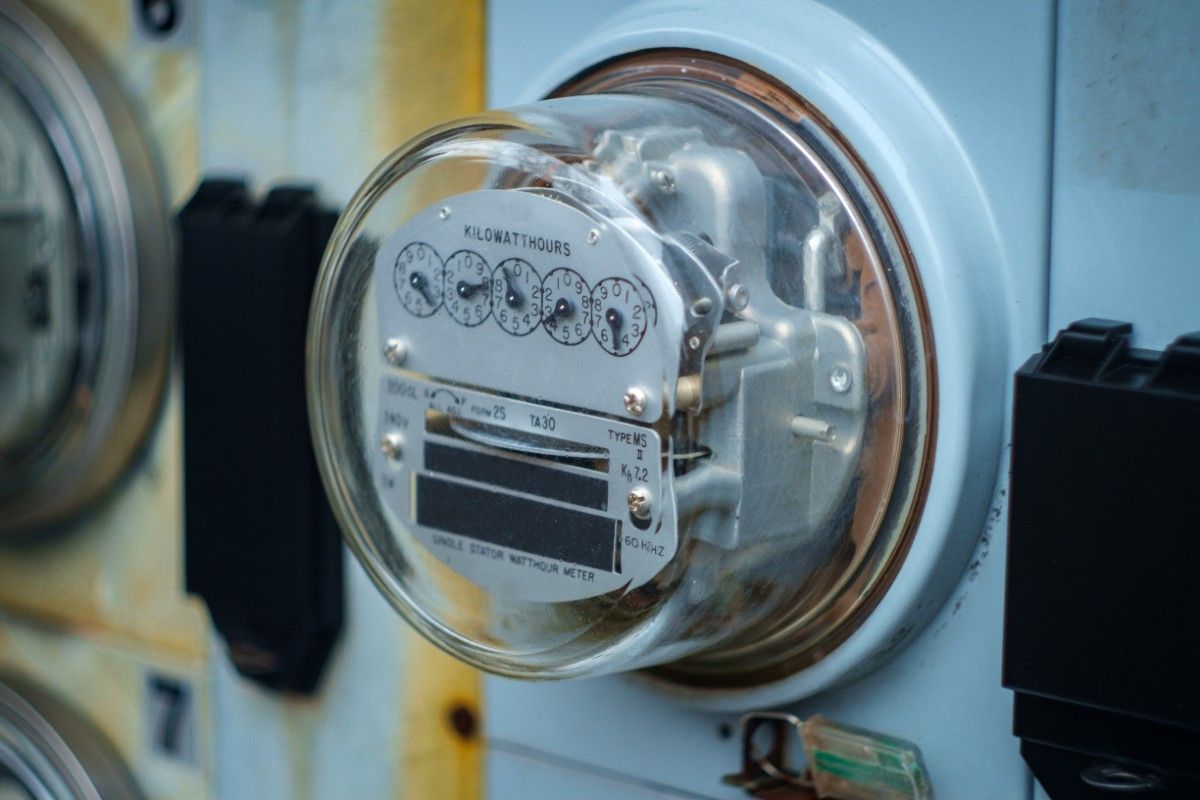
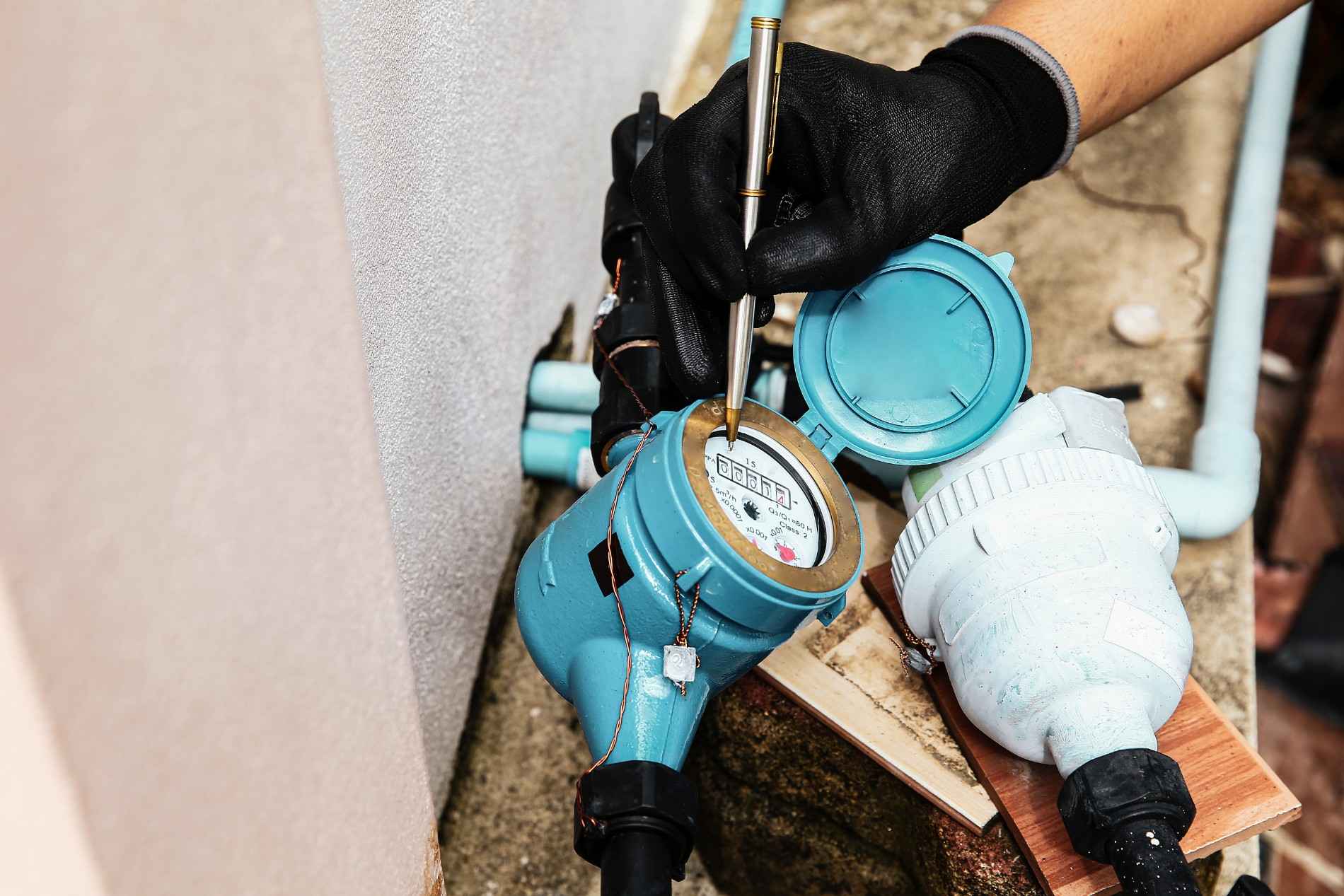
Automatic meter reading (AMR) for water utilities is the system of transmitters, receivers, and software that collects meter consumption data remotely without a field technician reading each meter individually. Water utilities use three AMR technology types: drive-by systems where a vehicle with a receiver collects reads as it passes meters, walk-by systems where a technician carries a handheld receiver near meters, and fixed-network systems where meters transmit reads wirelessly to collector units throughout the distribution area. All three types replace manual read labor, but all three still produce only one read per billing cycle, which differentiates them from AMI systems that generate 15-minute or hourly interval data. The SMART360 meter data management platform processes reads from manual, AMR, and AMI meters in a single system.
Automatic meter reading describes any system that transmits a water meter's consumption reading to a collection point without requiring a technician to physically access the meter register. The defining characteristic of AMR, as distinct from advanced metering infrastructure (AMI), is the direction and frequency of data transmission. AMR systems transmit a consumption total when queried or on a fixed schedule; they do not produce continuous interval reads, and most AMR systems are one-way: the meter transmits, but the utility cannot send commands back to the meter.
Water utilities adopted AMR starting in the 1990s and 2000s primarily to address the labor cost and safety risk of manual meter reading routes. A manual read program for a utility with 10,000 meters requires technicians to access each meter location on a monthly schedule. AMR eliminates most of that route labor while delivering the same billing-period total that a manual read provides.
The limitation that AMR shares with manual reading is read frequency: one consumption total per billing cycle. That total is sufficient for flat-rate billing, tiered rate billing based on period consumption, and basic billing reconciliation. It is not sufficient for time-of-use rate billing, continuous non-revenue water monitoring, or customer-portal usage displays that show recent consumption.
Does your utility's current AMR technology deliver reads reliably in the physical environment of your distribution system, including underground vaults, remote rural locations, and areas with RF interference?
Water utilities use three distinct AMR transmission technologies. Each has different infrastructure requirements, coverage characteristics, and paths to future upgrade.
Drive-by AMR: A vehicle equipped with a receiver drives through service territory on a scheduled route. As the vehicle passes within range of each meter's transmitter (typically 100 to 300 feet), the meter transmits its reading. Drive-by AMR requires a vehicle and driver for each read cycle, but no fixed infrastructure investment beyond the meter transmitters. It is the most common AMR type in small-to-mid-sized municipal water utilities. Coverage depends on route design and is affected by physical obstacles like underground vaults that reduce signal strength.
Walk-by AMR: A technician carries a handheld receiver and walks within range of each meter to collect its reading. Walk-by is common in dense urban areas where vehicle access is restricted and in situations where meter transmitters are inside buildings. Labor cost is higher than drive-by because walking routes cover fewer meters per hour than vehicle routes. Walk-by is the least scalable of the three types as service territory grows.
Fixed-network AMR: Meters transmit reads to fixed collector units (towers, rooftop antennas, or utility poles) deployed throughout the distribution area. The fixed network collects reads continuously or on a configured schedule without requiring a vehicle route or walking technician. Infrastructure investment is higher, but operational cost per read is lower than drive-by or walk-by after deployment. Fixed-network AMR is the technology closest to AMI in its architecture and has the shortest hardware upgrade path when a utility decides to move to full AMI.
For a full breakdown of the AMI software stack that fixed-network AMR upgrades into, AMI software for utility metering programs covers the components and evaluation criteria.
For a detailed walkthrough of how the MDM layer works in this flow, what is Smart MDM meter data management covers the validation architecture and the distinction between legacy MDMS and modern interval-capable systems.
A properly deployed AMR program with MDM integration produces five measurable operational changes relative to a manual read program:
Does your utility need interval-level data for rate design, non-revenue water monitoring, or customer portal usage displays, or is billing-period consumption sufficient for your current operations?
| Capability | Manual Read | AMR | AMI |
|---|---|---|---|
| Read frequency | One read per billing cycle | One read per billing cycle | 15-minute to hourly interval reads |
| Field labor required | Yes, for every meter | Reduced (drive-by/walk-by) or eliminated (fixed network) | Eliminated |
| Infrastructure cost | Meter only | Meter transmitter + vehicle or fixed collectors | Meter + communication network + head-end |
| Interval data for TOU billing | No | No | Yes |
| Non-revenue water interval monitoring | No | No | Yes |
| Customer portal real-time usage | No | No | Yes |
| MDM required | No (for basic flat rate) | Yes (for VEE and billing integration) | Yes (required) |
The most important row for water utilities evaluating AMR vs AMI is the NRW monitoring row. AMR delivers billing-period totals, which support annual or quarterly NRW reconciliation but not continuous zone-level monitoring. AMI with MDM analytics enables continuous NRW monitoring at the interval level, which identifies loss zones within days rather than quarters.
For a view of where AMR fits within the 2025 metering landscape and when the upgrade to AMI makes operational sense, utility metering trends for 2025 and 2026 covers the AMI expansion trend and the conditions that typically trigger the AMR-to-AMI transition.
AMR deployments require two software layers to function as a billing program. The first is the AMR head-end software, which communicates with the collection hardware (drive-by receivers, fixed collectors), ingests read data, matches reads to meter accounts, and exports data to downstream systems. Most AMR hardware vendors supply their own head-end software bundled with the hardware.
The second layer is the MDM platform. Water utilities with manual read programs sometimes route consumption data directly from read sheets to the CIS without an MDM. AMR programs at scale require MDM because the volume of reads and the rate of exceptions exceeds what billing staff can handle manually. An MDM automates exception identification, applies estimation rules to missing reads, and maintains an audit trail of every read modification before it reaches billing.
For water utilities connecting an AMR head-end to a downstream CIS or billing system for the first time, AMI MDM integration: how smart meters connect to billing covers the integration architecture, which applies equally to AMR head-end-to-MDM connections.
SMART360 handles AMR read ingestion as part of its standard meter data management platform, supporting manual, AMR, and AMI reads in a single system with 25+ pre-built CIS and billing integrations.
AMR (Automatic Meter Reading) collects one consumption total per billing cycle via radio transmission, eliminating field labor but not increasing read frequency. AMI (Advanced Metering Infrastructure) collects 15-minute or hourly interval reads continuously, enabling TOU billing, real-time customer usage data, and continuous non-revenue water monitoring. AMR reduces operational cost; AMI enables a different set of rate design and analytics capabilities that AMR cannot support.
A small utility with a simple flat-rate structure and fewer than 2,000 meters can sometimes manage AMR data directly through the AMR head-end software without a dedicated MDM. Utilities above that size, or those with tiered rate structures, multiple meter types, or significant exception volumes, typically need MDM to automate VEE, manage read exceptions, and deliver clean data to the billing system.
The upgrade path depends on the AMR technology type. Fixed-network AMR utilities have the shortest path: the existing fixed collector infrastructure can sometimes be upgraded or supplemented with AMI-capable hardware, and the MDM and billing integration remain the same. Drive-by and walk-by AMR utilities typically need to deploy fixed communication infrastructure as part of an AMI conversion, which makes the upgrade a larger capital project.
AMR improves NRW tracking compared to manual reading by increasing read completion rates and reducing estimated bills, which are a source of undetected NRW. However, AMR cannot support the interval-level analysis that identifies when and where distribution losses occur. Utilities that need continuous NRW monitoring at the zone level require AMI with an MDM analytics layer.
Bynry Inc.
8 The Green STE.R,
Dover, Kent,
Delaware 19901
+1 732-630-0285
Bynry Inc.
Serene Tower, Pakharbaug
Pune, Maharashtra 411021
+91 93252-51217