
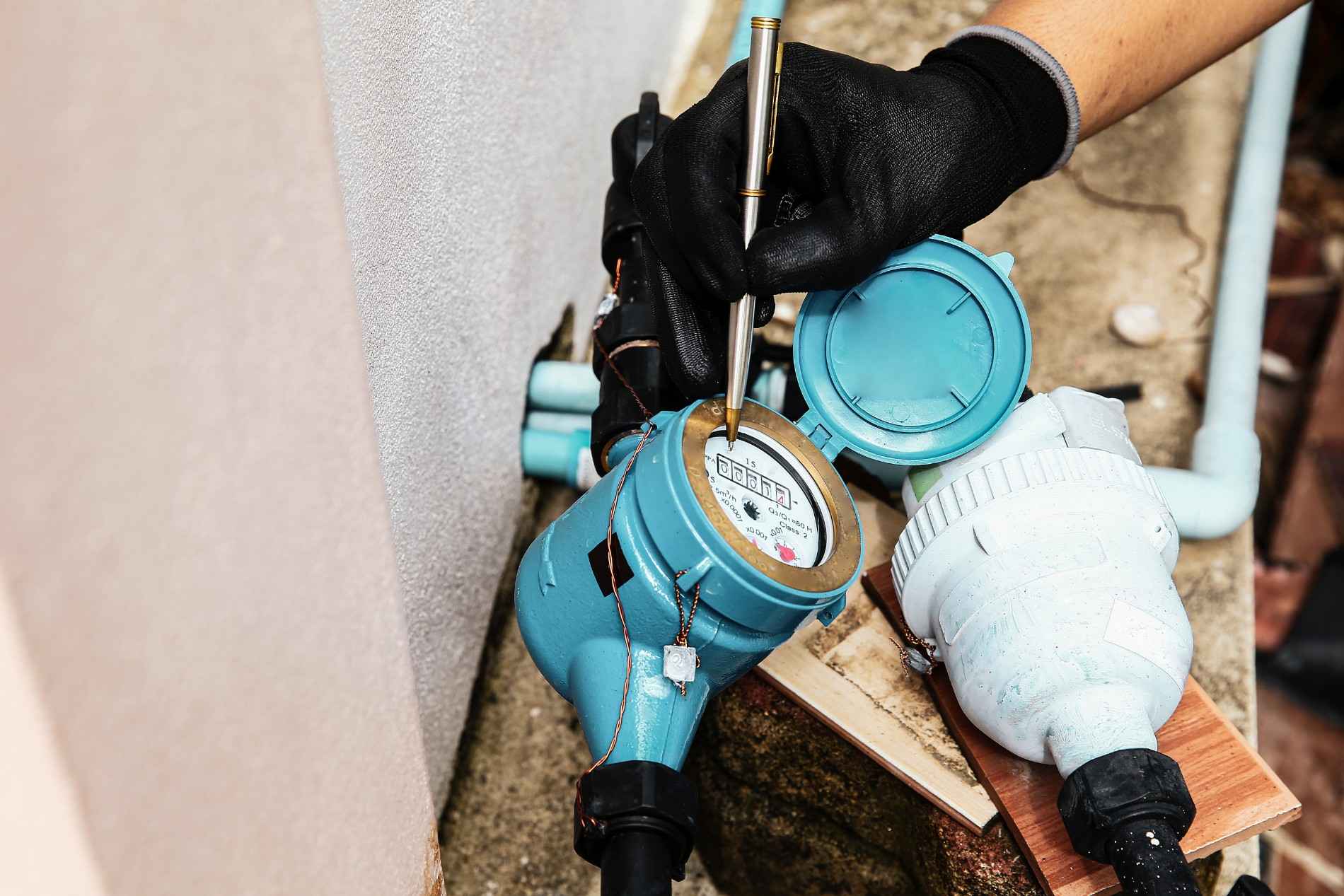




How meter reading route design drives program cost, the five-step optimization sequence, and where billing accuracy compounds.
For US Utilities serving 3,000-100,000 meters and for operations team, billing team and utility managers. For Heads of Billing who own collections accuracy and revenue leakage.
Automated meter reading route optimization is the practice of redesigning how meters are grouped, sequenced, and read so that fewer field hours cover more meters with fewer missed reads. It matters because route design, not meter count, drives most of the labor cost in a metering program, and because the reads a badly designed route misses become estimated bills that cost more to resolve than they did to collect.
Most utilities evaluating automated meter reading focus on the hardware decision: walk-by, drive-by, or fixed network. That is the visible choice. The cost that actually moves is quieter, and it sits in how routes are designed.
Two utilities with identical meter counts and identical hardware can run field programs that differ substantially in cost, because one has routes built around geography and access patterns and the other has routes that accumulated historically and were never revisited. Routes tend to be inherited. They were drawn when the service territory was smaller, adjusted when someone retired, and left alone since.
The SMART360 meter data management platform treats route structure as configurable data rather than a fixed property of the system, which is what makes optimization an ongoing operational task rather than a one-time migration project.
When were your meter reading routes last redesigned, rather than inherited and adjusted?
For most small utilities the honest answer is that nobody remembers, and that is where the recoverable cost sits.
A full cost picture for a reading program includes more than technician wages. Six categories make up the real baseline, and route quality affects every one of them.
For a breakdown of the AMR technology types that replace manual routes and their infrastructure requirements, automatic meter reading for water utilities covers the three AMR types and how each fits the billing workflow.
Route optimization means different things depending on which reading model you run. The work does not disappear when you automate; it changes shape.
The pattern worth noting is the last row. Automation does not eliminate field visits, it changes who gets one. A well-optimized program at any tier concentrates field time on the meters that genuinely need a person, which is why the consolidated data layer matters as much as the radio layer. The operational case for meter data management covers what that consolidation delivers beyond the reading program itself.
Does your cost model include the revenue leakage from estimated bills that are never fully recovered, or only the labor cost of issuing and resolving them?
Billing accuracy is the most consistently underestimated part of a metering business case. Most utilities track route labor precisely. Far fewer track what happens when an estimate runs below actual consumption and is only partly recovered in a later cycle.
That leakage is a route problem before it is a billing problem. Every estimated bill starts as a read that a route failed to collect. Reducing missed reads at the route level removes the estimate, the dispute, and the reconciliation together, which is why route optimization and billing accuracy are the same project viewed from two ends.
SMART360 deployments have delivered up to a 50% billing accuracy improvement for utilities running high estimated-bill rates under manual or basic AMR programs. Island Water Authority, which replaced a manual paper-to-screen billing process, is the reference deployment for what that consolidation looks like at scale.
For the evaluation criteria when upgrading from AMR to interval-capable systems, AMI software for utility metering programs covers the five-component stack and eight evaluation criteria.
Reading hardware reduces the number of reads a person has to collect. The MDM layer determines what happens to the reads that still fail, which is where the remaining cost lives once routes are optimized.
Three capabilities carry that load:
Automated validation, estimation, and editing. The MDM applies validation rules to every incoming read and flags exceptions at read receipt rather than at cycle close. Staff review only what the rules cannot resolve. Catching a bad read on the day it arrives, while the route is still fresh and a re-read is cheap, is materially different from finding it during billing close.
An audit trail on every read modification. Each estimated or edited read is recorded with the rule applied and a timestamp. When a customer disputes a charge, staff reconstruct the history from the record instead of from memory.
Automated delivery to the CIS. A clean read file moves to billing on a defined schedule, removing the manual transfer steps that introduce errors between metering and the billing engine. SMART360 includes 25+ pre-built integrations with CIS and billing platforms, which removes most custom middleware from the integration cost.
For how the MDM layer works and what separates modern interval-capable MDM from legacy systems, what is Smart MDM meter data management covers the architecture in full.
Route optimization is unusual among metering investments because the first round costs almost nothing. Remapping routes is analysis, not capital. That makes it the right thing to do before a hardware decision, not after, since it also produces the baseline the hardware case will be argued against.
Two things strengthen the case in front of a board. The first is the cost of inaction: deferring five years means paying five more years of the current program while wages and fleet costs rise. The second is a like-for-like comparison, because the alternative to automating is rarely zero spend. It is eventually buying the hardware anyway, later, at a higher price.
For utilities that have committed to automated metering and are evaluating the hardware upgrade path, AMR to AMI upgrade for utilities covers the six implementation steps and the parallel billing period that determines how fast the accuracy benefit is realized.
It is the redesign of how meters are grouped, sequenced, and scheduled so a reading program covers more meters in fewer field hours with fewer missed reads. It applies to manual walk routes, AMR drive-by paths, and fixed network coverage planning, though the specific lever differs at each tier.
Yes, but the work changes. With drive-by AMR the lever is the drive path and radio collection range. With fixed network the lever is collector placement and coverage gaps. Automation moves field effort onto exceptions and failed endpoints rather than removing it, so route thinking still applies.
Record reads completed per hour, missed read rate, and exception count per route for a full cycle before making changes, then compare after. Without that baseline the result is a matter of opinion, which is a weak position at budget time.
It should, because most disputes trace back to an estimated bill, and most estimated bills trace back to a read the route failed to collect. Reducing missed reads removes the estimate, the dispute, and the reconciliation work together.
Before. Route analysis is inexpensive, it frequently delivers savings on its own, and it produces the operational baseline your hardware business case will be measured against. Choosing hardware first means arguing the investment without knowing what the current program actually costs.
SMART360 keeps meter data, route structure, exception handling, and billing on one platform, so route changes and read validation happen in the same system rather than across separate tools.
Bynry Inc.
8 The Green STE.R,
Dover, Kent,
Delaware 19901
+1 732-630-0285
Bynry Inc.
Serene Tower, Pakharbaug
Pune, Maharashtra 411021
+91 93252-51217