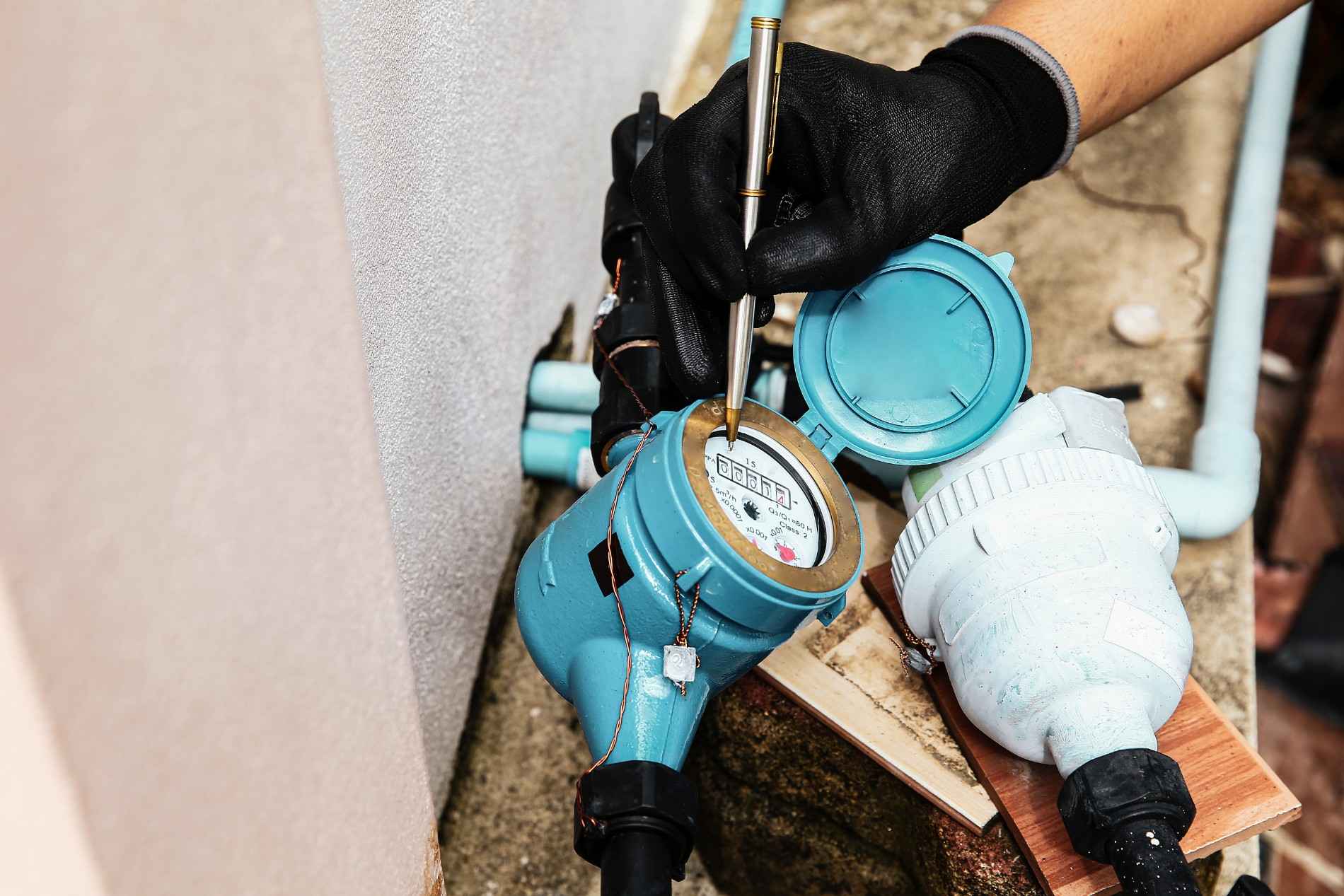





Compare the best utility metering solutions: Itron, Sensus, Badger Meter, Neptune, Aclara, and SMART360. Features, MDM, billing integration, and pricing.
For US Utilities serving 3,000-100,000 meters and for operations team, billing team and utility managers. For Heads of Billing who own collections accuracy and revenue leakage.
The utility metering solutions worth evaluating in 2026 are Itron ChoiceConnect, Sensus FlexNet (Xylem), Badger Meter BEACON, Neptune R900, and Aclara STAR Network on the hardware and network side, plus integrated meter data management platforms like SMART360 that sit on top of those networks and connect the reads to billing. The hardware vendors give you the meters and the network. They do not give you a clean path from those reads into a correct bill without additional integration work. That is where most utilities lose revenue and most billing staff lose hours: not at the meter, but at the seam between the reading system and the billing system. This comparison breaks down what each solution covers, how they stack up, and which fits your utility size and service type.
If you are running Neptune 360, Sensus FlexNet, or any AMR system right now, you already know how this works: export routes out of your billing system, import them into the meter reading software, collect reads, import the file back, validate, then bill. Every one of those handoffs is a place reads get dropped, delayed, or estimated, and your billing staff spends the first half of every billing cycle fixing data that should have arrived clean.
Before you compare vendors, get every quote itemized against these six layers so you are comparing scope, not just price:
A vendor who quotes you only the first two layers and calls it a metering solution is not lying, but they are leaving the most expensive part of the problem for your IT staff to solve after the contract is signed.
When was the last time a meter caused a wrong bill, versus a read that got dropped or estimated between your metering system and your billing system?
The answer is almost always the latter. With that in mind, here is how the leading solutions compare on the layers that actually produce correct bills:
The pattern in that table: Itron, Sensus, Badger, Neptune, and Aclara are network-first vendors. They sell you the best way to collect reads. The MDM and billing integration are either a separate product, a separate license, or a project you build yourself. SMART360 is a billing-first platform that ingests reads from any of those networks and manages the data and billing side natively. They are not competitors so much as different layers of the same stack. For how the AMI software side specifically works inside that stack, AMI software for utility metering covers the head-end and data-flow requirements to verify with any AMI vendor.
Are you shopping for a faster way to collect reads, or for a system that turns those reads into correct bills without your staff touching the data in between?
These are genuinely different purchases, and the answer changes what you buy:
AMR (Automatic Meter Reading) removes the meter reader with a handheld. Drive-by or walk-by, the reads come in faster with less labor. It does not give you interval data, alerts, or real-time reads, and it does not validate or bill anything.
AMI (Advanced Metering Infrastructure) gives you a fixed network: interval reads, leak alerts, tamper detection, remote connect and disconnect. Neptune's R900 Gateway v4 is software-defined, so utilities already on R900 AMR can upgrade to AMI without replacing the endpoints, which protects prior hardware investment. But AMI still only collects the data. It does not validate it or make it billable.
MDM (Meter Data Management) is the layer that catches the zero-usage anomalies, handles estimated reads when a meter fails to report, reconciles meter exchanges so no usage falls through the gap, and feeds clean data to billing. This is the layer that prevents wrong bills, and it is the one most utilities under-invest in. You can have a state-of-the-art Itron OpenWay Riva network and still produce billing errors if there is no MDM layer validating reads before they reach billing.
The most common expensive mismatch: buying a full AMI network and skipping or under-speccing the MDM layer, then discovering that billing accuracy did not improve because the problem was never the collection, it was the validation. For a full breakdown of what the MDM layer actually does and what to require from it, what is meter data management (MDMS) covers the validation, estimation, and editing workflow in detail.
How many systems does data pass through between the time a meter is read and the time a bill goes out, and how many of those handoffs does your staff touch manually?
Work through these five steps before you sign anything:
Most utilities buying a metering solution end up with a network vendor for hardware, an MDM product for validation, and a billing system that accepts a feed from the MDM. Three vendors, two integration projects, and a billing staff that still manually reconciles meter exchanges and rate-code changes because the three systems do not agree.
SMART360 is one platform: reads come in from any network (Itron, Sensus, Badger, Neptune, Aclara), the MDM layer validates them natively, and billing runs on the same system. There is no export-import cycle and no integration to break. Island Water Authority migrated 15,500 meter details onto SMART360, and the 92% reduction in billing errors did not happen because the meters got better. It happened because the data stopped crossing system boundaries. SMART360 manages 50,000+ meters on pay-per-meter pricing, so cost scales with your meter count, not your transaction volume or change-request log. To see how that compares against your current three-vendor stack, book a demo.
Badger Meter BEACON is worth shortlisting for compact water utilities: the cellular AMI endpoint means no RF network buildout, the BEACON platform includes cloud MDM, and the SaaS pricing scales to smaller meter counts without enterprise licensing minimums. Neptune R900 is worth comparing if you are already on Neptune AMR endpoints, because the software-defined gateway lets you upgrade to AMI without replacing the meters. If your priority is connecting metering to billing in one system rather than upgrading the network, SMART360 works with either and removes the integration layer.
Often yes. Neptune's R900 Gateway v4 is specifically designed for this: software-defined, it upgrades existing R900 AMR endpoints to AMI capability without stranding the hardware investment. Sensus FlexNet and Itron ChoiceConnect also support hybrid deployments where you run AMR in rural areas and AMI in dense ones on the same platform. The practical constraint is whether your current endpoints are compatible with the new network technology, which is a question for the vendor's field team on your specific meter model and vintage.
Not natively. Itron and Sensus provide MDM software as a separate licensed product, and billing integration is via a connector to your CIS (Oracle, SAP, Harris, and others) that may require a professional services engagement to configure. Badger Meter BEACON includes cloud MDM in its platform but billing integration is still via API to your existing CIS. If your CIS is aging or non-standard, confirm supported integrations with each vendor before you shortlist, because an unsupported CIS turns a metering upgrade into a CIS replacement project.
AMI network buildouts are capital-intensive: hardware, installation, and network infrastructure typically run $150 to $400 per endpoint depending on meter type, territory density, and network technology, putting a full AMI deployment for 10,000 meters at $1.5M to $4M before MDM and integration costs. Many utilities fund this through EPA WIFIA loans or USDA rural infrastructure grants. Per-meter SaaS pricing (SMART360) runs a fixed per-connection rate at the 25,000-connection tier, covering the full platform including MDM, billing, and customer portal.
Hardware vendor MDM (Itron Enterprise Edition, Sensus Analytics, Badger BEACON) is optimized for the vendor's own network data. It handles the reads from their endpoints well but may require additional configuration or a separate product to normalize reads from other vendors' meters if you run a mixed fleet. A standalone MDM platform or an integrated billing platform like SMART360 ingests reads from any source and is neutral to the network vendor, which matters if you run Itron in one service area and Neptune in another.
The most important step is running both systems in parallel through at least one full billing cycle before cutting over. Your new AMI network should be collecting reads and your AMR system should still be running, so you can compare the two and confirm the AMI reads are clean and complete before billing from them. Neptune's software-defined gateway makes this easier because the AMR endpoints keep reporting while the gateway is being upgraded. The AMR-to-AMI transition is also when most meter exchange records get dropped, so confirm your MDM reconciles old and new meter reads across every changeout before you close the legacy system.
For where metering technology is heading next, including the shift toward interval data and AI-assisted anomaly detection, utility metering trends covers the developments shaping metering investment decisions over the next few years.
Bynry Inc.
8 The Green STE.R,
Dover, Kent,
Delaware 19901
+1 732-630-0285
Bynry Inc.
Serene Tower, Pakharbaug
Pune, Maharashtra 411021
+91 93252-51217