




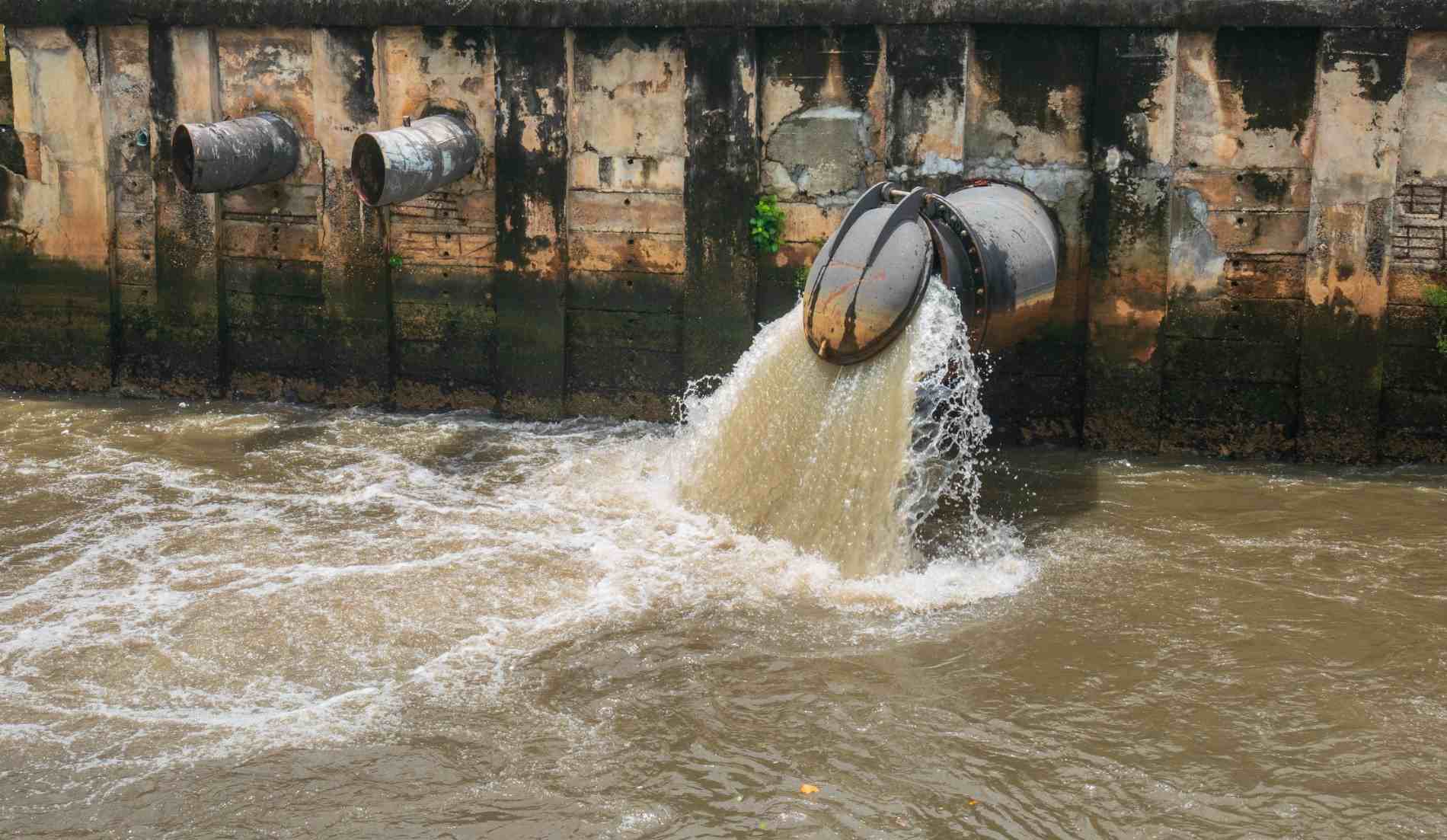
Track stormwater assets and the inspections, cleaning, and repairs against them in one system, so MS4 permit reporting is a query, not a scramble.
For US Utilities serving 3,000-100,000 meters and for operations team, billing team and utility managers. For Heads of Billing who own collections accuracy and revenue leakage.
Stormwater asset and work order management is the practice of tracking every piece of stormwater infrastructure (catch basins, pipes, culverts, detention ponds, and outfalls) as an asset record, then driving the inspections, cleaning, and repairs against each asset as work orders in the same system. Doing both in one platform is what makes an MS4 permit auditable: the asset holds the record, and the work order holds the proof of maintenance. When assets sit in a spreadsheet or GIS and work orders live in a separate system, inspection history is scattered and compliance reporting becomes a manual reconstruction every audit cycle.
Stormwater utilities and public works departments carry thousands of assets that rarely get attention until one fails during a storm. A single mid-sized system can hold tens of thousands of catch basins, hundreds of miles of storm pipe, and dozens of detention ponds and outfalls, each with its own inspection schedule and regulatory obligation. Managing them well means treating the asset and the work against it as one connected record.
This guide covers why stormwater is hard to manage, what a stormwater asset record should hold, how to set up asset and work order management together, and how the MS4 permit shapes the whole process. Utilities evaluating a platform that keeps assets and work orders in one place should look at SMART360 for water utility management, built for the 3,000 to 100,000 connection range.
Stormwater sits in a hard spot operationally. Unlike water and sewer, it usually generates no meter and no bill, so it competes for budget against services that produce revenue. Yet it carries a federal compliance obligation and fails visibly, through flooding, when neglected.
The management problem is fragmentation. Assets are commonly mapped in GIS, inspection records kept in spreadsheets, and repairs tracked in a separate work order tool or on paper. When a storm drain floods, staff cannot quickly see when the connected catch basin was last cleaned, what the last inspection found, or whether a work order is already open. The same fragmentation that plagues water asset programs applies here, and the fundamentals in the water utility asset management guide apply directly to stormwater infrastructure.
Are your stormwater assets and work orders in the same system?
If an inspector logs a finding in one system and the repair crew works from another, the asset record and the maintenance history drift apart. The first casualty is the audit: proving a catch basin was inspected and cleaned on schedule means stitching together a GIS export, a spreadsheet, and a stack of paper work orders. When the asset and its work orders share one record, that proof is one click.
Every stormwater asset type has a characteristic maintenance pattern. Knowing the pattern is how you set inspection frequencies and forecast crew workload.
Most of the recurring labor is inspection and cleaning of catch basins and pipes, because sediment and debris accumulate every season. Detention ponds and outfalls generate less frequent but higher-cost work. Planning inspection cycles by asset type keeps a small crew ahead of the failures instead of reacting to them.
An asset record is only useful if it carries enough to drive maintenance and satisfy an audit. Each stormwater asset should hold:
The point of holding all of this on the asset is that the record answers the two questions that matter: what condition is this asset in, and can I prove we maintained it. A record that holds only location without condition and maintenance history is a map, not an asset management system.
Setting up stormwater asset and work order management follows a consistent sequence whether you start from spreadsheets or from GIS.
The step utilities underestimate is the first one. A stormwater inventory is rarely complete, and the assets missing from it are the ones no one is inspecting. Field-verifying the inventory before building schedules prevents a compliance program that looks complete on paper but misses assets in the ground.
For most US stormwater operators, the reason this becomes a program rather than an afterthought is the MS4 permit. A Municipal Separate Storm Sewer System permit, issued under the federal NPDES program, requires operators to inspect and maintain their stormwater infrastructure and to keep records that prove it. Failing to produce those records is itself a violation, even if the maintenance happened.
This is where connected asset and work order management pays for itself. When every inspection and cleaning is captured as a work order tied to the asset, the annual permit report is a query, not a scramble. Utilities managing stormwater alongside broader regulatory obligations should review the overview of water utility regulations and compliance software to see how maintenance records feed compliance reporting.
Can you produce an inspection history for any catch basin on demand?
That is the question an MS4 auditor effectively asks. If the answer requires pulling three systems together, the program is carrying audit risk it does not need to. A single asset record with its full work order history attached turns the audit from a reconstruction into a lookup.
SMART360 keeps asset management and work order management in one platform, so a stormwater asset carries its condition, inspection history, and every work order in one record. Inspection and cleaning schedules generate work orders automatically, crews complete them on mobile with photos and findings attached to the asset, and reporting pulls maintenance history by asset, area, or permit requirement.
Island Water Authority deployed SMART360 including its Asset Management and Service Orders modules and reached go-live in 10 weeks, contributing to a 47% operational cost reduction. For a stormwater program run by a small crew, keeping assets and the work against them in one system is what makes preventive maintenance and permit reporting sustainable. Utilities comparing tools specifically for the work order side should read the work order software comparison for water utilities.
It is the practice of tracking stormwater infrastructure (catch basins, pipes, culverts, detention ponds, and outfalls) as asset records, then managing the inspections, cleaning, and repairs against each asset as work orders in the same system. The asset holds the condition and history; the work order holds the proof of maintenance. Keeping both connected is what makes stormwater maintenance plannable and MS4 permit reporting auditable.
When assets live in GIS or a spreadsheet and work orders live in a separate tool, inspection history and maintenance records drift apart. Proving that an asset was maintained on schedule then requires stitching multiple systems together. One connected record lets staff see an asset's condition, its last inspection, and any open work order at once, and turns permit reporting into a query instead of a manual reconstruction.
A Municipal Separate Storm Sewer System permit, issued under the federal NPDES program, requires operators to inspect and maintain stormwater infrastructure and to keep records proving it. Failing to produce those records is a violation even when the maintenance was done. Capturing every inspection and cleaning as a work order tied to the asset makes the required records available on demand.
A stormwater asset record should include location and identity (GIS coordinates, asset ID, type, material, size, install date), condition and inspection history with photos, full maintenance history of every work order run against it, the inspection or cleaning schedule with the next due date, and the regulatory requirement the asset falls under. Together these answer the two questions that matter: what condition the asset is in, and whether you can prove it was maintained.
Bynry Inc.
8 The Green STE.R,
Dover, Kent,
Delaware 19901
+1 732-630-0285
Bynry Inc.
Serene Tower, Pakharbaug
Pune, Maharashtra 411021
+91 93252-51217